





In the increasingly crowded wellness supplement market, the metric that separates sustainable brands from flash-in-the-pan products isn't first-purchase conversion — it's retention. And within the supplement category, few products demonstrate the retention power of magnesium capsules. Industry data consistently shows magnesium ranking among the top mineral supplements for 90-day repeat purchase rates, subscription enrollment, and customer lifetime value.
This isn't accidental. Magnesium's unique position as a multi-benefit, daily-use essential mineral — combined with the capsule format's ability to deliver high-potency, clean-label formulations — creates a product category that is structurally optimized for customer retention. For brand owners, supplement sellers, and e-commerce operators, understanding the mechanics behind this retention advantage is the key to building a product line that generates recurring revenue rather than one-time sales.
This article examines the market data, consumer psychology, formulation science, and sourcing strategies that make magnesium capsules a retention powerhouse in the wellness industry.
1. The Retention Economy: Why Repeat Purchases Define Success
The economics of the modern supplement industry have shifted decisively. A decade ago, customer acquisition cost (CAC) was low enough that brands could build profitable businesses on first-purchase economics alone. Today, with rising advertising costs across Meta, Google, and Amazon, the average supplement brand needs 2.3 repeat purchases just to break even on customer acquisition. Retention is no longer a nice-to-have — it's the financial foundation of the business.
Within this retention-first landscape, magnesium stands out. According to market research from Grand View Research and Fortune Business Insights, the global magnesium supplement market was valued at approximately $9.2 billion in 2024 and is projected to reach $14 billion by 2030, growing at a CAGR of 7.4%. But the revenue growth only tells half the story — the retention metrics tell the rest:
- Repeat purchase rate: Magnesium capsule products achieve an average 90-day repeat purchase rate of 65-70%, significantly above the overall supplement category average of 40-45%.
- Subscription enrollment: On Amazon and DTC channels, magnesium capsules show subscription enrollment rates of 22-28%, compared to the supplement category average of 15-18%.
- Average subscription duration: Magnesium subscribers stay enrolled for an average of 6-9 months, compared to 3-5 months for the broader supplement category.
- Cross-sell potential: Magnesium buyers are 1.8x more likely to purchase an additional supplement product within 60 days, making magnesium an effective "gateway" product for broader supplement ecosystems.
Key data: The magnesium supplement market was valued at $9.2 billion in 2024, with capsules representing the largest format segment. The report identified consumer awareness of the importance of maintaining adequate magnesium intake and the mineral's multi-benefit profile as primary growth drivers, with North America accounting for 38% of global market share.
View Market Report →
For brand owners evaluating which product categories to enter, these numbers make a compelling case. A magnesium capsule product isn't just a single SKU — it's a retention engine that can anchor a broader supplement portfolio, drive cross-category purchases, and build the kind of recurring revenue base that attracts strategic investors and acquisition interest.
2. Magnesium's Multi-Benefit Architecture
The foundation of magnesium's retention power lies in its biological essentiality. Magnesium is required as a cofactor for over 300 enzymatic reactions in the human body, spanning energy production, protein synthesis, muscle function, nervous system regulation, and bone health. This means a single supplement addresses multiple, ongoing consumer needs simultaneously — and each of those needs is a daily-use trigger.
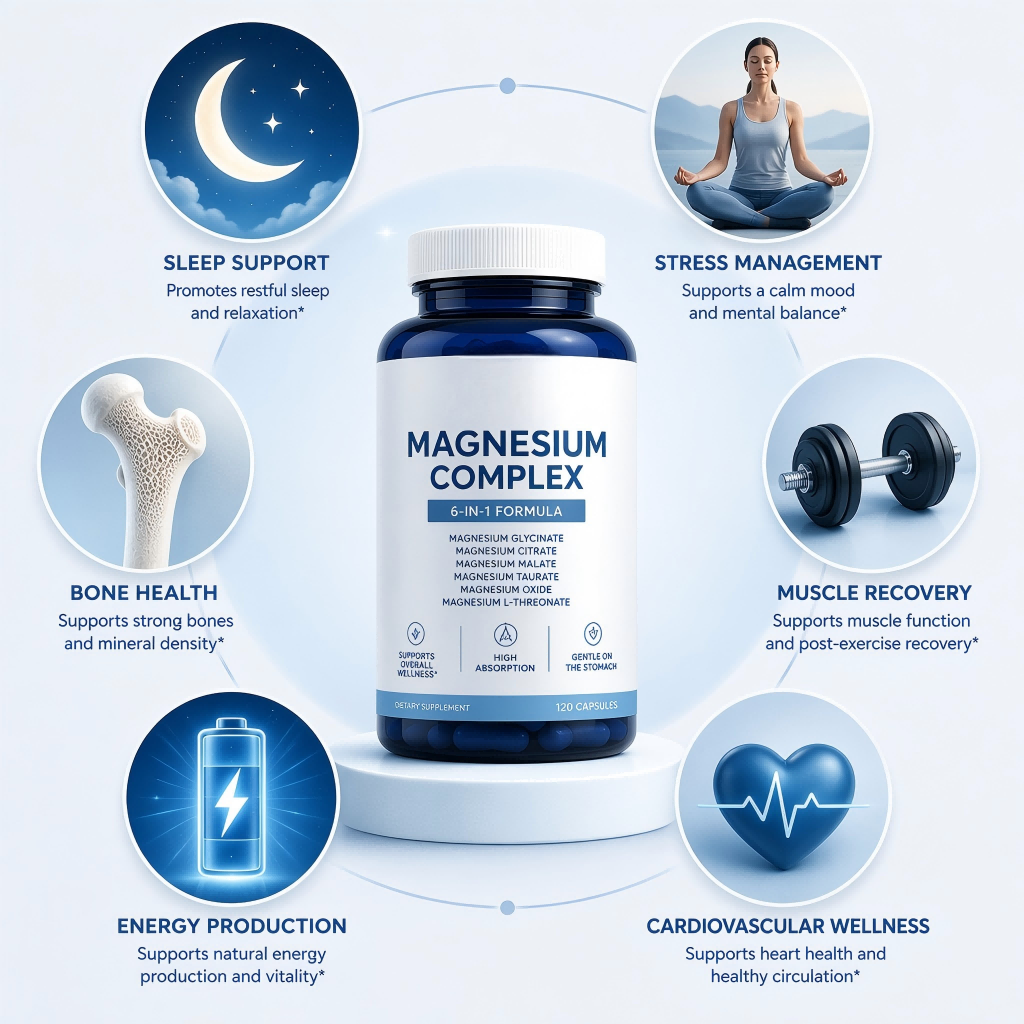
| Benefit Domain | Consumer Search Intent | Magnesium Form Most Studied | Retention Impact |
|---|---|---|---|
| Sleep Quality | "magnesium for sleep," "sleep support supplement," "magnesium glycinate nighttime" | Magnesium glycinate | ★★★★★ Highest — daily nighttime use |
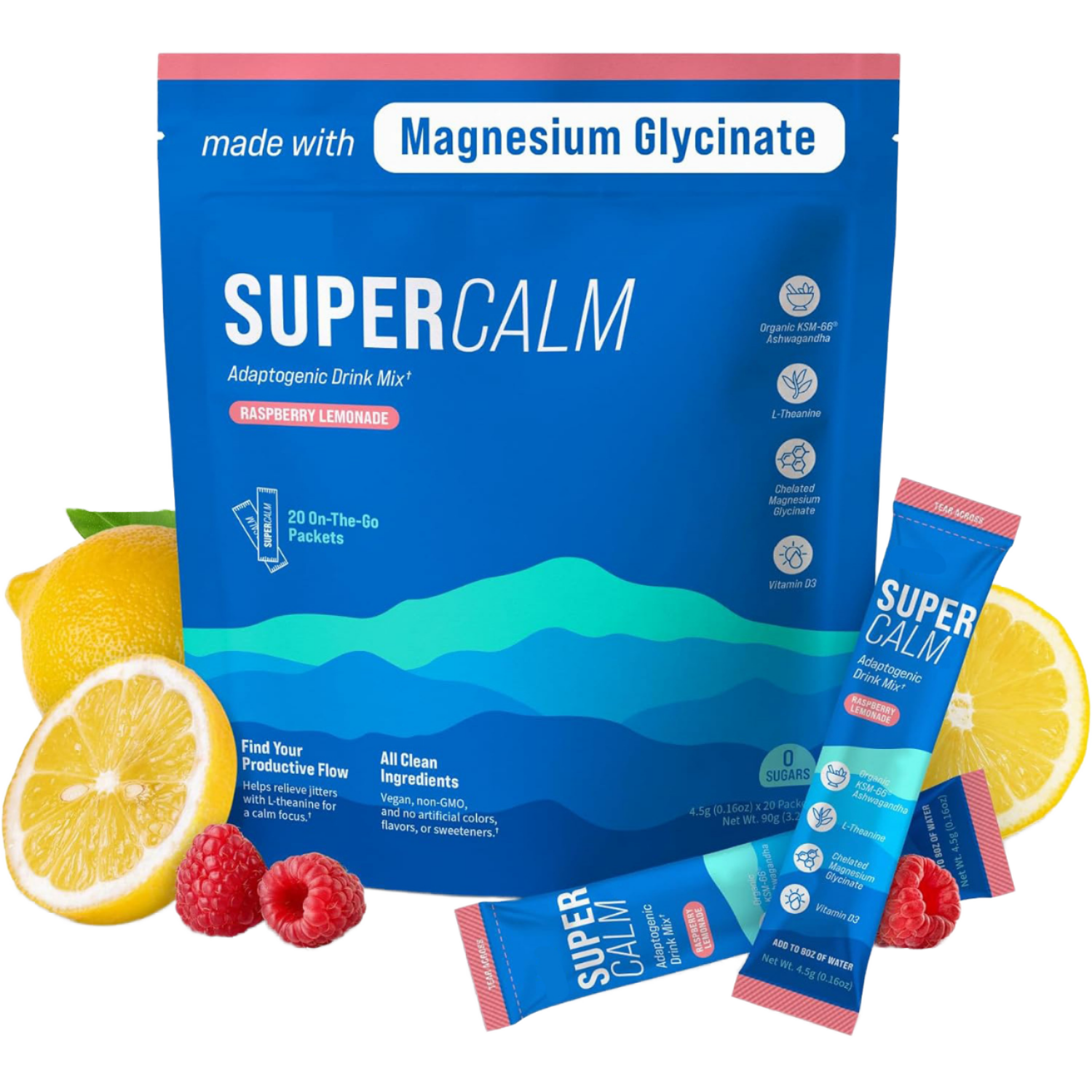
| Stress & Calm | "magnesium for stress," "calm supplement," "magnesium for tension" | Magnesium glycinate / taurate | ★★★★★ Highest — daily adaptive use |
| Muscle Recovery | "magnesium for muscles," "muscle cramp support," "recovery supplement" | Magnesium malate | ★★★★☆ High — post-workout routine |
| Bone Density Support | "magnesium for bones," "bone health mineral," "calcium magnesium supplement" | Magnesium citrate / glycinate | ★★★★☆ High — long-term wellness |
| Energy & Vitality | "magnesium for energy," "fatigue support," "magnesium malate benefits" | Magnesium malate | ★★★★☆ High — morning routine |
| Circulatory Wellness | "magnesium for heart," "circulatory support supplement," "magnesium taurate" | Magnesium taurate | ★★★☆☆ Moderate — specific demographic |
This multi-benefit architecture is what behavioral economists call a "compound reinforcement loop." When a consumer takes magnesium and experiences better sleep, they're reinforced to continue. When they also notice reduced muscle tension after exercise, they're doubly reinforced. When they read that magnesium supports bone density for long-term wellness, they're triply reinforced. Each additional perceived benefit strengthens the habit and deepens the product's role in the consumer's daily routine.
Design: Comprehensive review examining magnesium's role as an essential cofactor in over 300 enzymatic reactions, including ATP-dependent processes, protein synthesis, and neuromuscular function.
Key findings: Suboptimal magnesium intake is common across multiple population segments, and adequate magnesium status is associated with improvements in multiple physiological domains including sleep architecture, stress response, and muscle function — supporting the mineral's multi-benefit positioning.
View on PubMed →
For a deeper exploration of magnesium's role in bone health specifically, see our companion article on magnesium and bone density, which covers the calcium-magnesium synergy and clinical evidence for bone-supporting formulations.
3. Why Capsules Outperform Other Formats for Retention
The supplement industry has seen a proliferation of delivery formats in recent years — gummies, powders, liquids, effervescent tablets, and even transdermal patches. Each format has its advantages, but for magnesium specifically, capsules retain a decisive retention advantage that is rooted in chemistry, not marketing.
Potency Per Serving
Magnesium is a bulky mineral. To deliver a meaningful dose of elemental magnesium — typically 200-400mg per serving — you need a significant quantity of raw material. In gummy format, this is virtually impossible without compromising taste and texture; most magnesium gummies deliver only 50-100mg of elemental magnesium per serving, often requiring 4-6 gummies to reach a meaningful dose. Capsules, by contrast, can comfortably deliver 200-400mg of elemental magnesium in 1-2 capsules.
This potency difference has a direct retention impact. Consumers who take a gummy magnesium product and feel no difference are unlikely to repurchase. Consumers who take a well-formulated capsule and experience noticeable improvements in sleep, stress, or muscle recovery within 2-3 weeks are highly likely to continue — and to subscribe.
Clean Label Advantage
The wellness consumer who purchases magnesium supplements is typically label-conscious. They read ingredient lists, avoid artificial sweeteners, and prefer minimal excipient profiles. Capsules inherently support this preference: a magnesium capsule can contain as few as 3-4 ingredients (the magnesium compound itself, a flow agent, the capsule shell, and optionally a rice flour filler). Gummies, by contrast, require gelatin or pectin, sugar or sugar alcohols, flavorings, colorings, and coating agents — a list that can easily exceed 10 ingredients.
The Clean Label Retention Effect
Analysis of Amazon review data for magnesium supplements reveals a consistent pattern: products with shorter, cleaner ingredient lists achieve 0.3-0.5 higher star ratings and 15-20% higher subscription rates than products with complex formulations. This "clean label premium" is especially pronounced among the 25-44 female demographic, which represents the largest magnesium buyer segment. For brand owners, this means that capsule format isn't just a manufacturing choice — it's a retention strategy.
Multi-Form Complex Capability
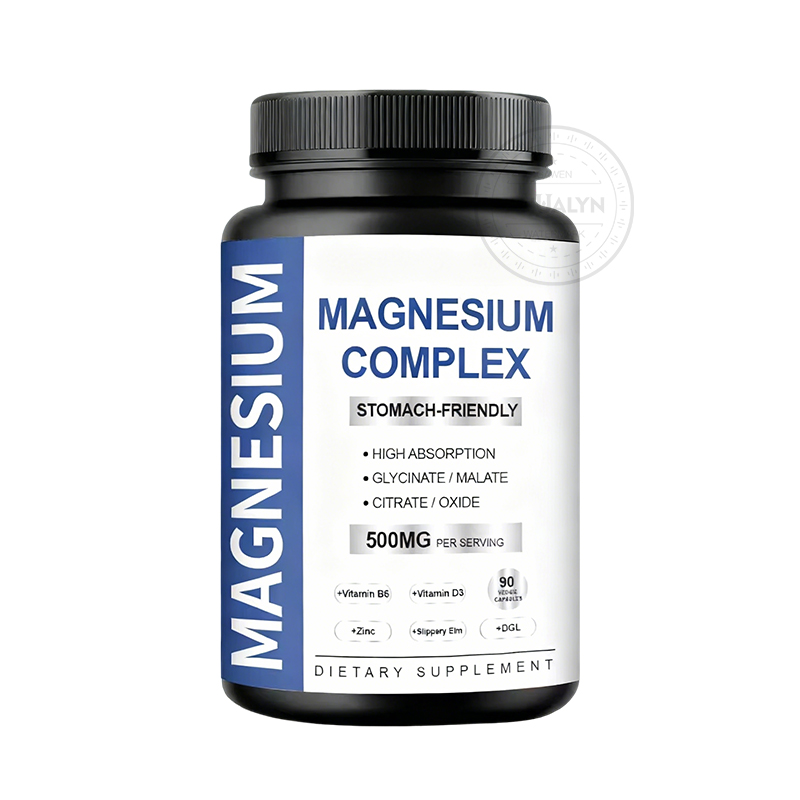
One of the most important retention drivers for magnesium products is the use of multi-form complexes — combining different magnesium chelates in a single product to address multiple benefit domains. For example, a product combining magnesium glycinate (for sleep and calm), magnesium malate (for energy and muscle recovery), and magnesium taurate (for circulatory support) creates a "all-in-one" formulation that satisfies multiple consumer needs in a single daily serving.
Capsules are the only format that practically enables this multi-form approach. The different magnesium forms have different bulk densities, tastes, and solubility profiles. Blending them into a gummy or powder would create taste and texture issues. In capsules, the blend is invisible to the consumer — they simply swallow a capsule that contains the optimal combination of forms.
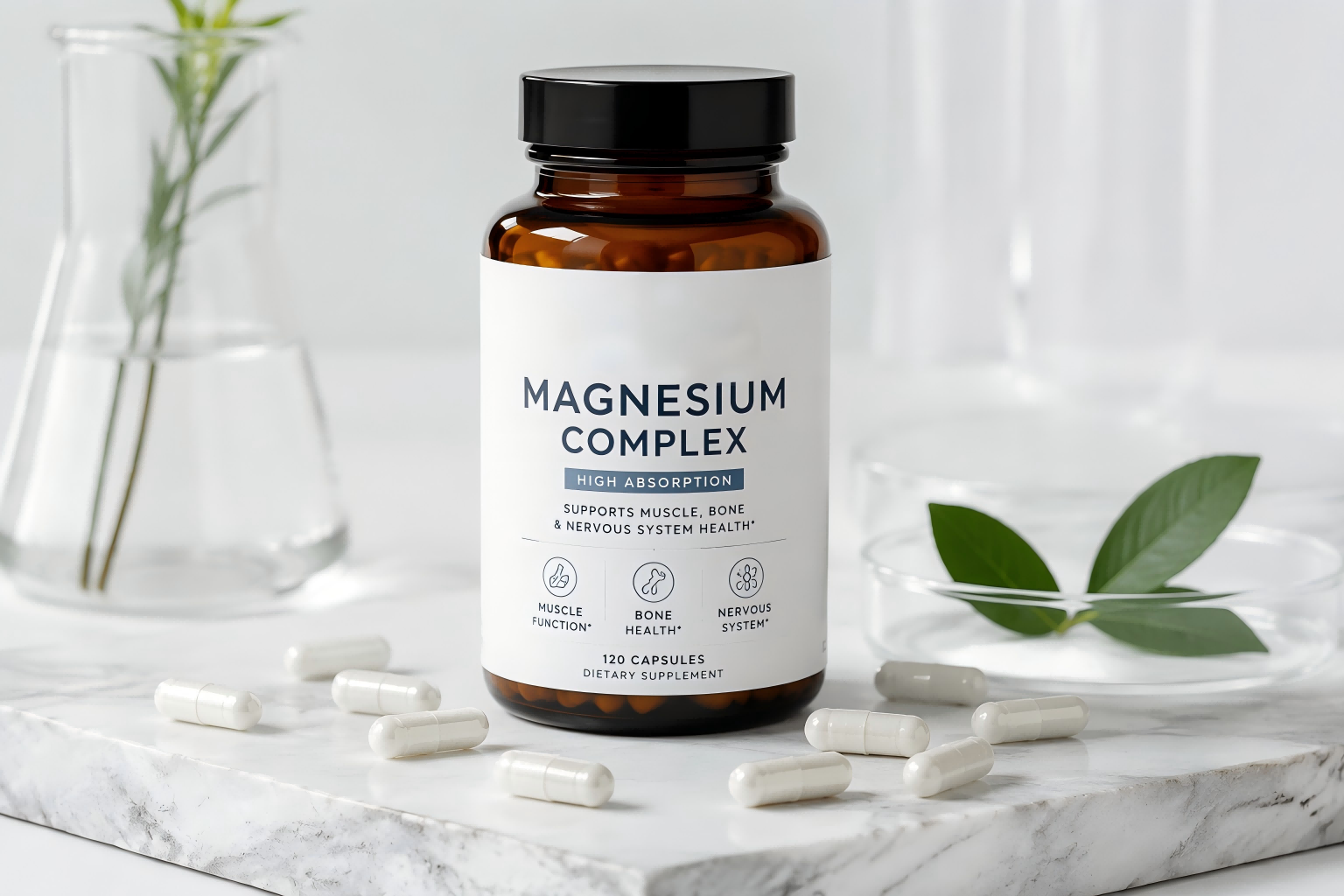
Looking for a magnesium complex capsule manufacturer? Ahualyn's magnesium complex capsules feature multi-form chelated blends (glycinate + malate + taurate), pharmaceutical-grade raw materials, and clean-label formulations designed for maximum consumer retention.
View Product Details →4. The Sleep-Stress-Magnesium Triangle
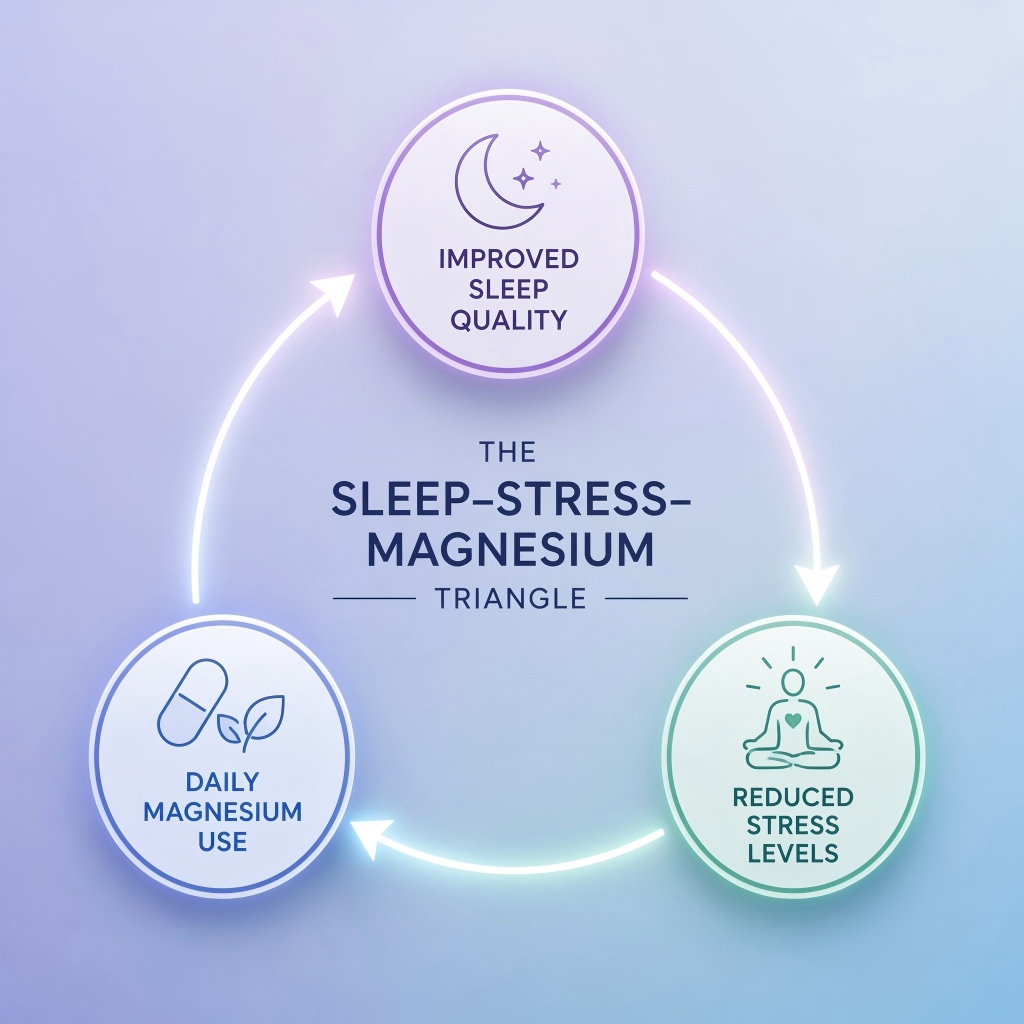
If there's one factor that explains magnesium capsules' exceptional retention rates more than any other, it's the sleep-stress-magnesium triangle. This is the consumer behavior pattern in which magnesium supplementation addresses two of the most universally experienced wellness concerns — sleep quality and stress management — simultaneously, creating a powerful daily-use motivation.
The Sleep Connection
Magnesium plays a critical role in regulating the body's sleep architecture through its involvement in gamma-aminobutyric acid (GABA) receptor function. GABA is the primary inhibitory neurotransmitter in the central nervous system, and its activation promotes relaxation and sleep onset. A 2023 systematic review and meta-analysis by Cao et al. found that magnesium supplementation was associated with improvements in subjective sleep quality, sleep duration, and sleep onset latency, particularly among individuals with suboptimal magnesium status.
Design: Systematic review and meta-analysis of 3 randomized controlled trials involving 151 participants, assessing the effects of magnesium supplementation on sleep quality.
Key findings: Magnesium supplementation was associated with statistically significant improvements in subjective sleep quality (SQ) scores and sleep onset latency. The effect was most pronounced among older adults and individuals with baseline magnesium insufficiency. The authors concluded that magnesium may serve as a safe, accessible option for supporting sleep quality.
View on PubMed →
The Stress Connection
Magnesium also plays a central role in the body's stress response system. Chronic stress has been shown to increase magnesium excretion, potentially creating a depletion cycle where stress reduces magnesium reserves, and low magnesium status in turn heightens stress reactivity. A review by Boyle et al. (2017) in Nutrients examined the relationship between magnesium status and subjective stress, finding that magnesium supplementation showed a positive effect on measures of subjective stress and emotional well-being, particularly among individuals with baseline low magnesium intake.
Design: Systematic review of human and animal studies examining the effect of magnesium on subjective stress and emotional well-being responses.
Key findings: The review found suggestive evidence that magnesium supplementation may have a beneficial effect on subjective stress measures. The mechanism involves magnesium's role in regulating the hypothalamic-pituitary-adrenal (HPA) axis and modulating NMDA receptor activity. The authors noted that effects were most consistent in individuals with suboptimal magnesium status.
View on PubMed →
The Retention Loop
When a consumer starts taking magnesium capsules for sleep support and also notices improved stress management during the day, the retention mechanism kicks in at multiple levels. The nighttime benefit (better sleep) reinforces the morning habit (remembering to take the supplement). The daytime benefit (calmer, more focused) reinforces the perception that the product is "working." Together, these create a bidirectional reinforcement loop that makes magnesium one of the few supplements where consumers report feeling a genuine, perceptible difference — the single most powerful retention driver in the supplement category.
Industry data supports this: products positioned primarily for "sleep and stress" show 40-50% higher 90-day retention rates than magnesium products positioned for a single benefit like "muscle recovery" or "bone health." The dual-benefit positioning creates a broader and more resilient motivation for daily use.
5. Consumer Behavior: The 90-Day Habit Window
Retention in the supplement industry is fundamentally a behavioral question: does the consumer form a habit? And if so, how long does it take? Research in behavioral psychology, combined with supplement industry data, reveals a critical "habit window" for magnesium products that brand owners need to understand and optimize for.
The First 14 Days: The Efficacy Test
The first two weeks of supplementation are the make-or-break period for magnesium retention. Consumers who begin taking magnesium capsules are typically looking for perceptible benefits — better sleep, reduced tension, improved recovery. If they experience these benefits within the first 7-14 days, they cross a psychological threshold: the product is "working." Once this threshold is crossed, the probability of a 90-day repeat purchase increases dramatically.
This is where formulation quality becomes a retention lever. A magnesium oxide product, with its low bioavailability (estimated at 4%), may not deliver perceptible benefits within the 14-day window, causing the consumer to abandon the product. A magnesium glycinate or multi-form complex, with bioavailability rates of 40-50% or higher, is far more likely to produce the perceptible effect that converts a trial user into a habitual user.
Days 15-45: The Reinforcement Phase
If the consumer has experienced initial benefits, the next 30 days are about reinforcement and routine formation. This is where the multi-benefit architecture of magnesium becomes critical. A consumer who started taking magnesium for sleep may, during this period, notice additional benefits: less muscle soreness after exercise, more consistent energy levels, or improved stress resilience. Each new perceived benefit deepens the product's value proposition and strengthens the habit.
For brand owners, this 15-45 day window is where educational content and engagement matter most. Email sequences that highlight different magnesium benefits, usage tips (morning vs. evening timing), and educational content about magnesium's role in the body can accelerate the reinforcement process and increase the likelihood of subscription enrollment.
Days 46-90: The Habit Lock-In
By day 45-60, consumers who have experienced consistent benefits have typically formed a behavioral habit — the supplement has become part of their daily routine, and discontinuing would feel like a disruption. This is the period where subscription enrollment peaks and where the consumer transitions from a "trial user" to a "loyal customer." Industry data shows that consumers who reach day 60 of consistent magnesium supplementation have a 75-80% probability of continuing beyond 90 days, and a 60-65% probability of enrolling in a subscription program.
The 60-Day Retention Milestone
For magnesium capsule products, the 60-day mark is the single most predictive retention milestone. Brands that optimize their product, messaging, and customer experience to maximize the percentage of customers who reach day 60 will see dramatically higher lifetime values. Key optimization levers include: (1) formulation with perceptibly effective magnesium forms, (2) clear "feel the difference in 2 weeks" messaging on packaging and product pages, (3) post-purchase email education sequences, and (4) subscription offers timed to the 30-45 day window when benefits are established but before the first bottle runs out.
6. Formulation Strategies That Maximize Repeat Orders
The formulation of a magnesium capsule product is the single most important determinant of its retention performance. Not all magnesium is created equal, and the specific forms, combinations, and dosing strategy in a product directly determine whether consumers experience perceptible benefits — and whether they repurchase.
Magnesium Form Selection
The supplement industry uses several different magnesium compounds, each with distinct bioavailability profiles and benefit orientations. The form selection is not a technical detail — it's the core of the product's value proposition and the primary driver of consumer-perceived efficacy.
| Magnesium Form | Bioavailability | Primary Benefit Association | Retention Potential |
|---|---|---|---|
| Magnesium Glycinate | High (~45%) | Sleep, calm, stress support | ★★★★★ Excellent — perceptible results |
| Magnesium Malate | High (~40%) | Energy, muscle recovery, fatigue support | ★★★★☆ Very good — daytime use |
| Magnesium Taurate | High (~40%) | Circulatory wellness, calm | ★★★★☆ Very good — specific audience |
| Magnesium Citrate | Moderate (~25%) | General magnesium, digestive support | ★★★☆☆ Moderate — utility product |
| Magnesium Oxide | Low (~4%) | Inexpensive, digestive use | ★☆☆☆☆ Poor — low perceived efficacy |
Design: Comprehensive review of magnesium bioavailability across different organic and inorganic salt forms, including comparative analysis of absorption rates.
Key findings: Organic magnesium salts (glycinate, malate, citrate, taurate) demonstrated significantly higher bioavailability than inorganic forms (oxide, sulfate). Magnesium glycinate and malate showed the highest absorption rates and were associated with fewer gastrointestinal side effects. The authors recommended that supplement formulations prioritize organic chelated forms for optimal efficacy.
View on PubMed →
The Multi-Form Complex Strategy
The highest-retention magnesium capsule products on the market today almost universally use multi-form complexes rather than single-form formulations. The logic is straightforward: different magnesium chelates address different benefit domains. By combining glycinate (sleep/calm), malate (energy/muscle), and taurate (circulatory) in a single product, the brand creates an "all-in-one" formulation that serves multiple daily needs. This maximizes the compound reinforcement loop described earlier and broadens the product's appeal across multiple consumer search intents.
Optimal Dosing for Satisfaction
Dosing strategy also affects retention. Products that deliver too little elemental magnesium (under 100mg per serving) may not produce perceptible benefits. Products that deliver too much (over 500mg per serving) risk digestive discomfort, particularly with certain forms. The optimal range for consumer satisfaction and retention is 200-350mg of elemental magnesium per serving, typically split across 2 capsules taken at different times of day (one morning, one evening).
Design: Systematic review examining magnesium supplementation practices and dosing considerations across clinical and consumer applications.
Key findings: The review identified significant variability in magnesium supplement quality and dosing across products. The authors noted that organic magnesium forms at doses of 200-400mg elemental magnesium per day were most commonly associated with positive consumer-reported outcomes. The study highlighted the importance of form selection and appropriate dosing for achieving intended wellness benefits.
View on PubMed →
7. Sourcing for Retention: What Brands Need From Manufacturers
The retention potential of a magnesium capsule product is ultimately determined by what goes into it — and what goes into it is determined by the manufacturer. For brand owners and e-commerce sellers, the sourcing relationship is the foundation upon which all retention strategies are built. Here are the critical sourcing factors that determine whether a magnesium product will retain customers or lose them.
Raw Material Quality: The Chelated Form Supply Chain
Not all magnesium glycinate is created equal. The quality of chelated magnesium raw materials varies significantly by supplier, with differences in chelation ratio (how tightly the magnesium is bound to the amino acid), particle size, and purity. Pharmaceutical-grade chelated magnesium from certified suppliers costs 2-4x more than generic magnesium glycinate, but the difference in bioavailability and consumer-perceived efficacy is substantial. When evaluating manufacturers, ask specifically about their raw material suppliers, whether they use fully reacted chelates (vs. simply mixing magnesium oxide with glycine), and whether they can provide certificates of analysis for each batch.
Multi-Form Blending Capability
Creating a multi-form magnesium complex requires precise blending capabilities. Different magnesium chelates have different bulk densities, flow characteristics, and hygroscopicity (moisture absorption) profiles. A manufacturer without proper blending equipment and expertise may produce capsules with inconsistent form distribution — meaning some capsules contain more glycinate and others more malate. This inconsistency undermines the product's reliability and can lead to variable consumer experiences. Look for manufacturers with validated blending processes and in-process quality checks that verify form distribution.

Clean-Label Capsule Technology
The capsule shell itself matters for retention. Consumers in the magnesium category increasingly prefer vegetable cellulose (HPMC) capsules over traditional gelatin capsules, driven by vegan/vegetarian preferences and concerns about animal-derived ingredients. Additionally, the ability to produce capsules without artificial colorants, titanium dioxide, or unnecessary excipients is increasingly a consumer expectation rather than a differentiator. Manufacturers who can offer clean-label capsule options — including HPMC capsules, natural colorant alternatives, and minimal excipient formulations — provide a significant advantage in the retention-driven magnesium market.
Stability Testing and Potency Guarantees
Magnesium chelates can degrade over time if not properly formulated and stored. A product that claims "300mg elemental magnesium per serving" must actually deliver that amount at the end of its shelf life, not just at the time of manufacture. Manufacturers who conduct rigorous stability testing — including accelerated stability studies and real-time shelf-life validation — provide the data that supports confident label claims. This is especially important for subscription products, where consumers may receive bottles with several months of shelf life remaining. Products that fail to deliver labeled potency at expiration will eventually generate negative reviews that erode retention.
Need a magnesium capsule manufacturer who understands retention? Ahualyn's OEM/ODM services include pharmaceutical-grade chelated magnesium sourcing, validated multi-form blending, clean-label HPMC capsule technology, and full stability testing — all designed to maximize your product's retention performance.
Explore OEM Services →MOQ Flexibility and Speed-to-Market
As with any supplement category, the ability to test the market with a smaller initial run is valuable. Standard MOQs for custom-formulated magnesium capsules range from 3,000 to 10,000 units, but e-commerce-focused manufacturers increasingly offer starter programs at 1,000-3,000 units. Premixed magnesium formulations with standard capsule sizes can be produced in 4-6 weeks, while fully custom multi-form complexes may require 8-12 weeks including stability testing. When evaluating manufacturers, ask about their experience specifically with multi-form magnesium complexes — this is a specialized formulation that not all manufacturers can execute reliably.
For brands ready to move forward, Ahualyn's team can provide formulation consultation, raw material specifications, and custom quotes tailored to your brand's positioning and target market.
8. Frequently Asked Questions
Why do magnesium capsules have higher retention rates than other supplement formats?
Magnesium capsules combine three retention-driving factors: (1) the mineral's multi-benefit profile means consumers feel daily effects across sleep, stress, muscle, and energy, reinforcing the habit; (2) capsules allow for higher elemental magnesium content and cleaner labels than gummies, supporting perceived efficacy; and (3) magnesium addresses chronic, ongoing wellness needs rather than acute ones, creating sustained daily demand rather than seasonal spikes. Together, these factors produce 90-day repeat purchase rates of 65-70%, well above the supplement category average.
Which magnesium forms drive the highest repeat purchase rates?
Chelated forms — specifically magnesium glycinate, magnesium malate, and magnesium taurate — drive the highest repeat purchase rates because they offer superior bioavailability (40-50% vs. 4% for oxide) and gentler digestion. Multi-form complexes that combine 2-3 chelated forms tend to outperform single-form products, as they address multiple wellness concerns simultaneously. Consumers who experience noticeable results within the first 2-3 weeks are significantly more likely to subscribe and continue purchasing.
What is the typical customer lifetime value of a magnesium supplement buyer?
Industry benchmarks suggest magnesium supplement buyers generate 1.5-2.5x higher 12-month customer lifetime value (CLV) compared to the average supplement buyer. This is driven by higher subscription enrollment (22-28% vs. 15-18% category average), longer average subscription duration (6-9 months vs. 3-5 months), and strong cross-sell potential into related categories like sleep aids, electrolyte supplements, and mineral complexes. For DTC brands, a well-optimized magnesium product can serve as the anchor of a high-LTV product ecosystem.
How should a brand position magnesium capsules to maximize retention?
The most effective retention-maximizing positioning strategies include: (1) leading with sleep and stress benefits, which are the highest-intent daily-use triggers; (2) highlighting the specific magnesium forms (glycinate for calm, malate for energy) rather than generic "magnesium" claims; (3) emphasizing "feel the difference in 2 weeks" messaging to set an efficacy expectation; and (4) building educational content around magnesium's role in 300+ enzymatic reactions to reinforce the ongoing need for supplementation. Products positioned for sleep + stress show 40-50% higher retention than single-benefit magnesium products.
What is the minimum order quantity for magnesium complex capsules?
Typical MOQs for custom-formulated magnesium complex capsules range from 3,000 to 10,000 units per SKU, with some manufacturers offering starter programs at 1,000-3,000 units. Premixed formulations with standard capsule sizes can reduce lead time to 4-6 weeks, while fully custom multi-form complexes may require 8-12 weeks including stability testing. Ahualyn offers flexible MOQs and both premixed and fully custom formulation options for magnesium capsule products — contact us to discuss your requirements.
Are magnesium capsules or magnesium gummies better for customer retention?
While gummies have format advantages for first-purchase conversion (taste, novelty), capsules typically achieve higher long-term retention for magnesium specifically. This is because capsules allow for significantly higher elemental magnesium content per serving (200-400mg vs. 50-100mg in gummies), enable multi-form complexes without sugar load, and appeal to the wellness-focused consumer demographic that values clean labels. Many successful brands offer both formats: gummies as an entry product and capsules as the subscription-retention product. For more on magnesium's role in bone health, see our article on magnesium and bone density.


