
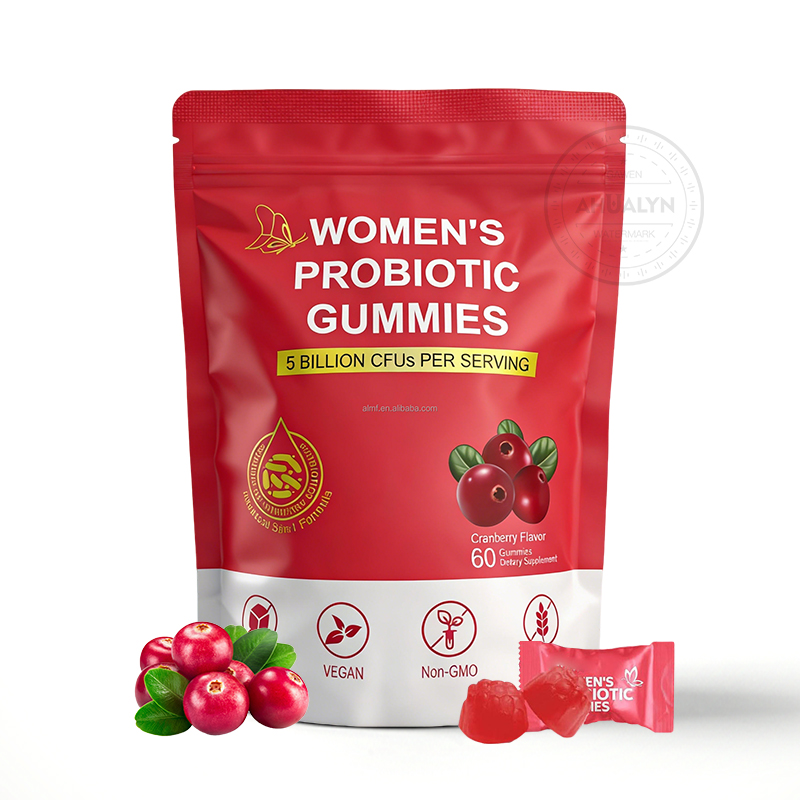






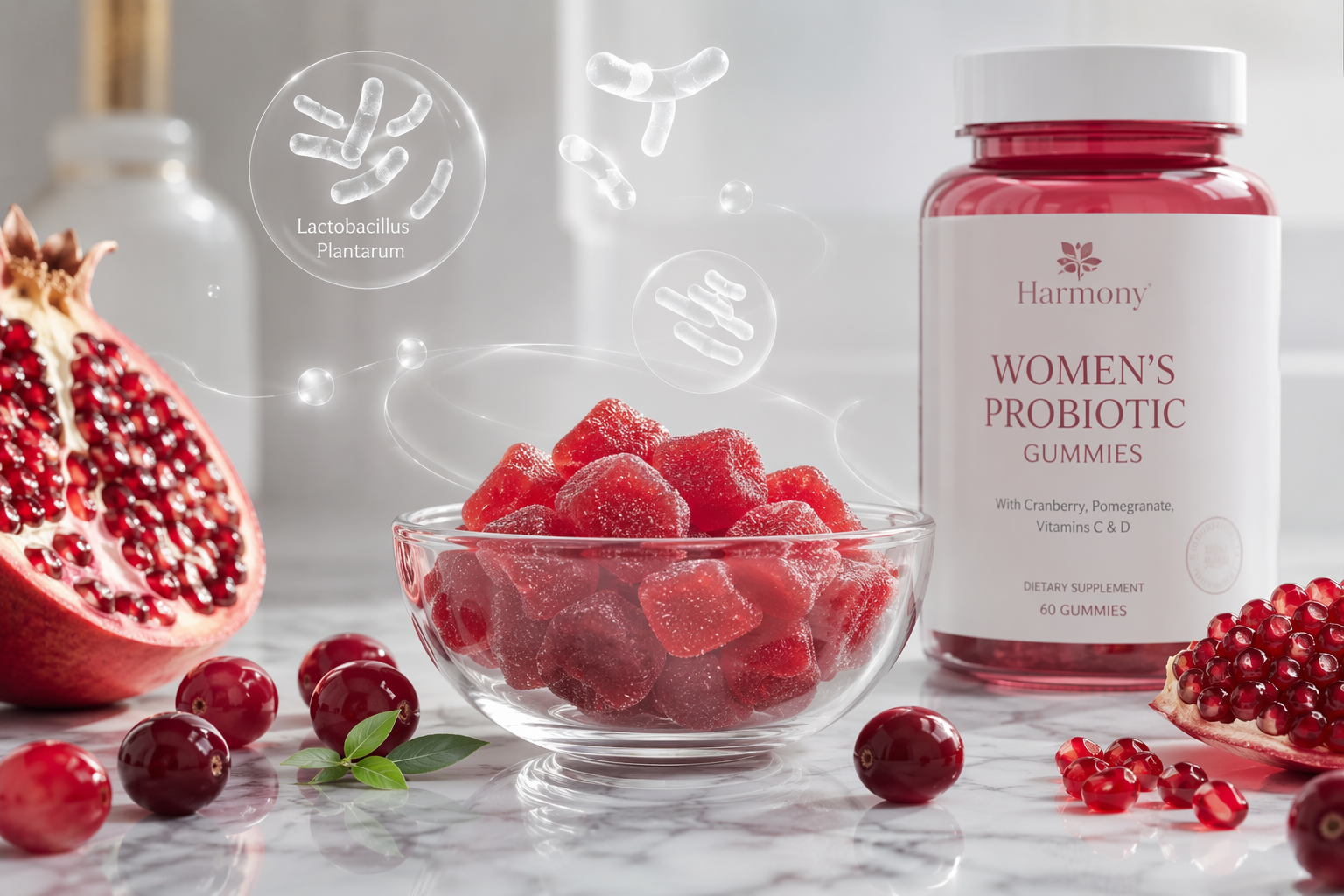
The women's probiotic supplement market is one of the fastest-growing segments in functional nutrition — and gummies have become the dominant delivery format. According to market intelligence, women's probiotic gummies are projected to grow at a CAGR exceeding 12% through 2030, driven by consumer preference for palatable formats and growing awareness of the vaginal-gut microbiome connection.
But for brand owners, private label distributors, and sourcing managers, this growth has created a problem: the market is flooded with probiotic gummies of wildly varying quality. Many products on shelves today contain strains with no clinical backing, CFU counts that degrade to near-zero before expiration, and sugar loads that contradict the health claims on the front of the bottle.
This guide is written for professionals responsible for sourcing women's probiotic gummies — whether you're launching a new brand, evaluating contract manufacturers, or auditing your existing supply chain. We'll cover the specific strains that matter for women's health, the technical challenges of keeping probiotics alive in a gummy matrix, the synergistic ingredients that elevate a formula from adequate to premium, and the quality markers that separate credible manufacturers from the rest.
1. The Women's Probiotic Gummy Opportunity
Before diving into ingredients and specifications, it's worth understanding why women's probiotic gummies represent a distinct sourcing category — not just a marketing angle on a generic probiotic product.
Women's microbiome needs differ from men's in several clinically significant ways. The vaginal microbiome is dominated by Lactobacillus species that maintain an acidic pH (3.8–4.5) and produce hydrogen peroxide and bacteriocins that help maintain a balanced microbial environment. Disruption of this ecosystem — through antibiotics, hormonal fluctuations, diet, or stress — can lead to microbiome imbalances and increased susceptibility to urinary tract health concerns.
A women's probiotic formula should address these specific needs:
- Vaginal microbiome support: Strains that colonize the vaginal tract and help maintain a balanced pH environment
- Urinary tract health support: Strains that help maintain a healthy urinary tract microbial environment
- Digestive health: Gut-targeted strains for overall microbiome diversity
- Hormonal balance support: Indirect support through gut-liver axis and estrogen metabolism
The gummy format adds another dimension. While capsules and powders have been the traditional probiotic delivery vehicles, gummies solve the compliance problem — particularly for women who are pregnant, postpartum, or managing multiple supplements. But gummies also introduce the most significant formulation challenge in the probiotic industry: keeping live organisms viable in a matrix that is inherently hostile to them.
2. Core Probiotic Strains for Women's Health
Not all probiotic strains are interchangeable. The clinical effects of probiotics are strain-specific — meaning Lactobacillus rhamnosus GR-1 has a different mechanism and evidence base than Lactobacillus rhamnosus GG, even though they belong to the same species. When sourcing, you need to look beyond the species name and identify the specific strain deposit number.
Lactobacillus rhamnosus GR-1
This is the most clinically validated strain for women's urogenital health. Originally isolated from the vaginal tract, L. rhamnosus GR-1 has been shown to colonize the vaginal mucosa after oral supplementation, produce lactic acid and hydrogen peroxide, and help maintain a healthy vaginal microbial balance. It is typically paired with L. reuteri RC-14 in clinical studies.
Design: Randomized, placebo-controlled trial. 64 healthy women received oral capsules containing L. rhamnosus GR-1 and L. fermentum RC-14 for 60 days.
Key findings: Oral supplementation successfully colonized the vaginal tract with Lactobacillus in 82% of subjects, restoring healthy vaginal flora. The strains reduced pathogenic yeast and bacterial counts, demonstrating that orally administered probiotics can reach and colonize the urogenital tract.
View on PubMed →
Lactobacillus reuteri RC-14
The companion strain to GR-1, L. reuteri RC-14 produces a bacteriocin (reuterin) with broad-spectrum antimicrobial activity. In clinical trials, the GR-1/RC-14 combination has been shown to support healthy vaginal flora and maintain microbiome balance. For a women's probiotic gummy, this strain pairing should be considered the foundational specification.
Design: Systematic review of clinical evidence for probiotics in supporting women's urogenital health.
Key findings: Probiotic supplementation — particularly with L. rhamnosus GR-1 and L. reuteri RC-14 — showed promising results in supporting urinary tract health and maintaining healthy urogenital flora. The review concluded that specific Lactobacillus strains can help support a balanced urogenital microbiome, providing an approach that complements cranberry and other wellness strategies.
View on PubMed →
Lactobacillus acidophilus
One of the most widely used probiotic strains, L. acidophilus supports both vaginal and digestive health. It produces lactic acid that helps maintain vaginal pH and has been shown to assist with lactose digestion, nutrient absorption, and immune modulation. While less specifically targeted to urogenital health than GR-1/RC-14, it provides broad-spectrum support and is well-suited to gummy formulations due to its relative stability.
Bifidobacterium lactis
Bifidobacteria are primarily gut-colonizing strains, but their inclusion in a women's formula is important for overall microbiome diversity. B. lactis supports immune function, helps regulate bowel movements, and has been studied for its potential role in reducing inflammation. In women's health specifically, gut microbiome diversity indirectly supports vaginal health through the gut-vaginal axis — the two microbiomes communicate through immune signaling and bacterial metabolites.
Strain Selection Summary
| Strain | Deposit No. | Primary Benefit | Evidence Level | Gummy Suitability |
|---|---|---|---|---|
| L. rhamnosus GR-1 | GR-1 (ATCC 55826) | Vaginal flora support | ★★★★★ Multiple RCTs | ★★★★☆ Good with overage |
| L. reuteri RC-14 | RC-14 (ATCC 55845) | Antimicrobial support, urinary tract health | ★★★★★ Multiple RCTs | ★★★★☆ Good with overage |
| L. acidophilus | La-14 / NCFM | Vaginal pH, digestive support | ★★★★☆ Strong | ★★★★★ Excellent |
| B. lactis | Bl-04 / HN019 | Gut diversity, immune support | ★★★★☆ Strong | ★★★☆☆ Moderate (sensitive) |
| L. plantarum | 299v / Lp-115 | Barrier function, anti-inflammatory | ★★★☆☆ Moderate | ★★★★☆ Good |
3. CFU Viability: The Gummy Format Challenge
This is where most probiotic gummies fail — and where sourcing decisions matter most. Probiotics are living organisms. They require specific conditions to survive: controlled temperature, low moisture, and neutral pH. A gummy matrix provides the opposite of all three: it contains 10–20% water, has an acidic pH (3.0–4.5 from citric acid or fruit acids), and undergoes a heating process during manufacturing that can exceed 60°C.
For sourcing professionals, understanding the viability challenge is essential to evaluating whether a manufacturer's CFU claims are credible.
The Death Curve in Gummies
When probiotic bacteria are introduced into a gummy matrix, they begin to die. The rate of death depends on water activity (Aw), pH, temperature, and the specific strain's robustness. A typical pattern looks like this: CFU count drops 1–2 log units (90–99%) within the first 60 days of manufacture, then continues a slower decline throughout shelf life. By the 24-month mark, a product that started at 10 billion CFU may contain fewer than 100 million — or may be below detection limits entirely.
This is why the distinction between "CFU at manufacture" and "CFU at expiration" is the single most important specification in a probiotic gummy sourcing agreement.
Solutions: How Quality Manufacturers Solve the Viability Problem
- Overage formulation: Adding 3–5x the label-claim CFU at manufacture to account for die-off. If the label claims 5 billion CFU at expiration, the manufacturer formulates with 15–25 billion at production. This is standard industry practice — but the overage must be validated with stability data.
- Water activity control: Maintaining Aw below 0.6 is critical. Above this threshold, bacterial metabolism continues and cell death accelerates. Pectin-based gummies typically achieve lower Aw than gelatin-based ones.
- Microencapsulation: Encapsulating probiotic cells in a protective matrix (often calcium alginate or lipid-based coatings) before incorporating them into the gummy. This creates a physical barrier against moisture and acid, extending viability by 3–6 months.
- Spore-forming strains: Bacillus coagulans (formerly Lactobacillus sporogenes) forms spores that are highly resistant to heat, moisture, and acid. While not a traditional Lactobacillus, it is increasingly used in gummy formulations for its stability. The trade-off is a different evidence profile for vaginal health specifically.
- Cold-chain manufacturing: Adding probiotics at the lowest possible temperature stage of gummy production, and maintaining cold-chain logistics during distribution. This is expensive but dramatically improves viability.
Beware "CFU at Manufacture" Claims
Some suppliers specify CFU count "at time of manufacture" only — a legally permissible but commercially misleading practice. A product claiming "10 billion CFU" at manufacture may contain less than 1% of that by the time it reaches the consumer. Always specify in your sourcing agreement that CFU must be guaranteed at the end of shelf life, validated by third-party stability testing.
Stability Testing Requirements
A credible manufacturer should provide stability data from real-time and accelerated testing conditions:
| Test Condition | Temperature / Humidity | Duration | Purpose |
|---|---|---|---|
| Real-time stability | 25°C / 60% RH | Full shelf life (18–24 months) | Validates CFU at expiration under normal storage |
| Accelerated stability | 40°C / 75% RH | 6 months | Predictive modeling for shelf life |
| Refrigerated stability | 4°C / ambient RH | Full shelf life | Validates cold-chain product claims |
| Cycling (freeze-thaw) | -5°C to 25°C cycles | 12 cycles | Simulates shipping temperature variation |
4. Synergistic Ingredients That Complete the Formula
A well-formulated women's probiotic gummy doesn't stop at the probiotic strains. Several complementary ingredients address women's health from different mechanistic angles, creating a formula that is more effective than probiotics alone.
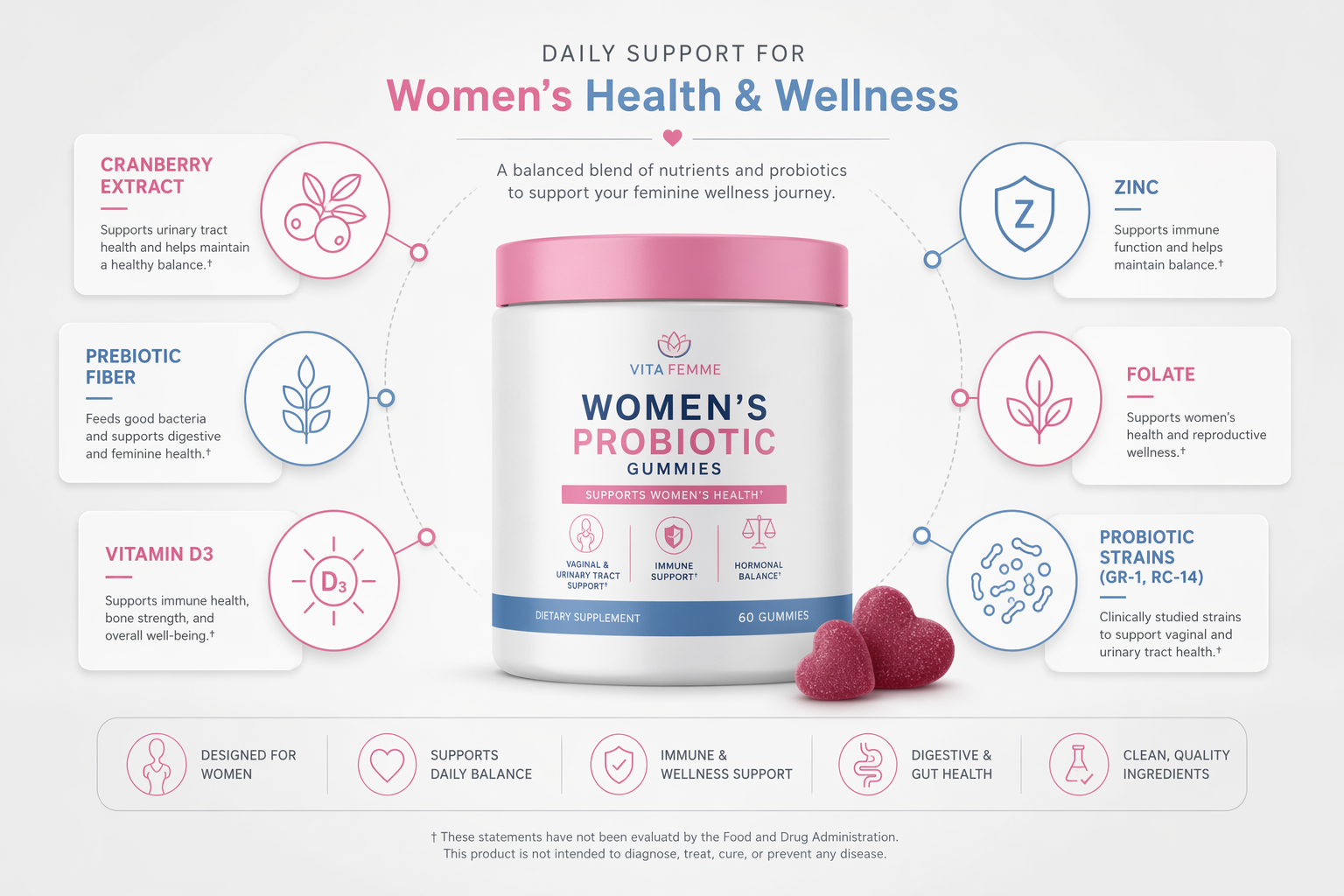
Cranberry Extract (Vaccinium macrocarpon)
Cranberry is the single most valuable addition to a women's probiotic gummy. Its proanthocyanidins (PACs) — specifically A-type PACs — help maintain a healthy urinary tract environment through an anti-adhesion mechanism that is entirely complementary to probiotics: cranberry supports the physical environment, while probiotics compete for binding sites and produce helpful metabolic compounds.
Design: Systematic review of 13 trials (1,616 participants) evaluating cranberry products for supporting urinary tract health.
Key findings: Cranberry products were associated with significant improvement in urinary tract health maintenance over 12 months compared to placebo/control, with the strongest effect observed in women who experience recurrent urinary tract health concerns. The review noted that optimal dosage and formulation requires further research, but the evidence for consistent benefit was observed across multiple trials.
View on Cochrane Library →
Sourcing specification: Look for cranberry extract standardized to 36 mg PACs per serving, measured by the DMAC method (the industry-standard quantification method). Avoid products that list only "cranberry juice powder" or "cranberry flavor" — these typically contain negligible PACs.
Prebiotics: Inulin and Fructooligosaccharides (FOS)
Prebiotics are non-digestible fibers that serve as food for probiotic bacteria. Including prebiotics in a gummy formula serves a dual purpose: they support the survival of probiotic bacteria within the gummy (by providing a substrate) and they nourish both the supplemented strains and the host's indigenous microbiome after consumption.
Inulin and FOS are the most common prebiotics used in gummy formulations because they also contribute to texture and sweetness. A target ratio is 1:3 to 1:5 (prebiotic to probiotic by weight), though this varies by formulation. The synbiotic approach — combining probiotics with prebiotics — has been shown to enhance colonization and persistence compared to probiotics alone.
Vitamin D3
Vitamin D3 deficiency is common in women and has been linked to increased susceptibility to vaginal microbiome imbalances. Vitamin D3 supports immune cell function, including the production of antimicrobial peptides (cathelicidins and defensins) that are active in the vaginal mucosa. Including 400–800 IU of D3 in a probiotic gummy adds an immune-support dimension that probiotics alone don't cover.
For more on vitamin D3's synergistic role in women's health, see our guide on magnesium, calcium, and the vitamin D activation triangle.
Zinc
Zinc supports immune cell proliferation and wound healing, and deficiency is associated with increased immune challenge susceptibility. In a women's probiotic formula, 5–10 mg of zinc (as zinc citrate or zinc gluconate for gummy compatibility) provides complementary immune support. Zinc and probiotics work through different pathways — zinc supports innate immune cell function while probiotics modulate the microbiome — making them non-redundant in a formula.
Folate (Vitamin B9)
For women of reproductive age, folate is essential. Including the active form (5-MTHF) rather than synthetic folic acid is a premium differentiator, as a significant percentage of the population has MTHFR gene variants that impair folic acid conversion. Folate doesn't directly interact with probiotics but rounds out a women's health formula, particularly if the product targets prenatal or preconception consumers.
| Ingredient | Target Dose/Serving | Mechanism | Sourcing Note |
|---|---|---|---|
| Cranberry extract | 36 mg PACs (DMAC) | Anti-adhesion of E. coli | Specify PAC standardization; avoid juice powder |
| Inulin / FOS | 1–3 g | Prebiotic substrate for probiotics | Also improves gummy texture; dual function |
| Vitamin D3 | 400–800 IU | Antimicrobial peptide production | Use D3 (cholecalciferol), not D2 |
| Zinc | 5–10 mg | Immune cell function | Citrate or gluconate for gummy compatibility |
| Folate (5-MTHF) | 200–400 mcg | Reproductive health support | 5-MTHF preferred over folic acid for MTHFR variants |
Sourcing a women's probiotic gummy line? Ahualyn provides OEM/ODM services with strain-specific formulation, cranberry PAC standardization, CFU-at-expiration guarantees, and full stability testing documentation. GMP-certified manufacturing with flexible MOQs.
Talk to Our Formulation Team →5. Red Flags When Evaluating Suppliers
After reviewing hundreds of probiotic gummy products and supplier specifications, certain patterns emerge that reliably indicate quality problems. If you encounter any of the following during supplier evaluation, proceed with caution — or walk away.
Red Flag 1: No Strain Deposit Numbers
If a supplier lists "Lactobacillus rhamnosus" without a strain designation (GR-1, HN001, GG, etc.), they are either using an uncharacterized strain or deliberately obscuring the identity. Strain deposit numbers are not optional — they are the only way to verify that the strain in the product matches the strain in the clinical studies. A supplier who cannot provide this information cannot guarantee efficacy.
Red Flag 2: CFU Guaranteed "At Manufacture" Only
As discussed in Section 3, CFU at manufacture is irrelevant to the consumer. What matters is CFU at the end of shelf life. If a supplier's specification sheet or COA only guarantees CFU at the time of production, this means they have not conducted (or cannot pass) stability testing. This is the most common shortcut in the industry.
Red Flag 3: "Proprietary Blend" Without Breakdown
Some suppliers list a "probiotic blend" with a total CFU count but don't disclose the individual strain breakdown or the CFU contribution of each strain. This prevents you from verifying whether the clinically relevant strains (GR-1, RC-14) are present at meaningful doses. A transparent supplier will list each strain, its deposit number, and its individual CFU contribution.
Red Flag 4: Sugar Content Above 3g Per Serving
High sugar content in a probiotic gummy is problematic for two reasons. First, it undermines the health positioning — a supplement that delivers 4g of sugar per serving is difficult to market as a health product. Second, high sugar increases water activity, which accelerates probiotic death. Premium formulations use sugar alcohols (erythritol, xylitol) or natural sweeteners (stevia, monk fruit) to keep sugar below 2g per serving while maintaining taste.
Red Flag 5: No Third-Party Verification
Internal COAs are a starting point, not a finish line. Credible manufacturers commission independent third-party testing (USP, NSF, Eurofins, or equivalent) to verify CFU counts, strain identity, and contaminant screening. If a supplier cannot provide third-party test results upon request, their internal quality data is unverifiable.
Red Flag 6: No Cold-Chain Option
While shelf-stable probiotic gummies are technically feasible with the right formulation, the most sensitive strains (particularly Bifidobacterium species) benefit significantly from cold-chain distribution. A supplier that has no cold-chain capability — or doesn't even discuss it as an option — may not understand the technical requirements of the product they're manufacturing.
6. Manufacturing Standards & Quality Assurance
Beyond ingredient specifications, the manufacturing environment and quality systems determine whether a probiotic gummy product is commercially viable. Here's what to verify during supplier audits:
GMP Certification
Current Good Manufacturing Practice (cGMP) certification is the baseline requirement for any dietary supplement manufacturer. In the US, this means FDA-registered facilities following 21 CFR Part 111. In the EU, look for GMP certification under the relevant national authority. For international distribution, verify that the facility's certifications cover your target markets.
Water Activity Specifications
The manufacturer should have documented water activity specifications for the finished gummy — typically Aw ≤ 0.6 for probiotic formulations. This should be measured on every batch and recorded in the COA. If the manufacturer doesn't measure Aw, they are not monitoring the single most important variable for probiotic stability.
Strain Identity Verification
Quality manufacturers use genetic identification (16S rRNA sequencing or whole-genome sequencing) to verify that the probiotic strains in their finished product match the strains on the label. This is the only way to definitively confirm strain identity — phenotypic methods are insufficient. Ask whether the manufacturer performs genetic ID testing and how frequently.
Batch Documentation
For each production batch, the supplier should provide:
- Certificate of Analysis (COA) with CFU count, strain ID, and contaminant screening
- Certificate of Origin for raw materials (especially cranberry extract)
- Manufacturing batch record summary
- Stability monitoring data (if batch is within the stability program)
- Third-party verification report (at minimum, quarterly)
Regulatory Compliance for Target Markets
Depending on your distribution markets, verify that the manufacturer can support the necessary regulatory documentation:
- US: FDA facility registration, cGMP compliance, New Dietary Ingredient (NDI) notifications if applicable
- EU: Novel Foods compliance for certain strains, EFSA health claim restrictions
- APAC: Country-specific requirements (China NMPA, Japan FOSHU, Australia TGA)
- Labeling: Allergen declarations, ingredient nomenclature, CFU declaration format
For brands distributing in multiple regions, working with a manufacturer who understands cross-border regulatory requirements — like Ahualyn's OEM/ODM services — eliminates compliance friction and accelerates time-to-market.
7. Frequently Asked Questions
Can probiotics survive in gummy format?
Yes — but it requires specialized formulation that goes beyond standard gummy manufacturing. The three critical factors are: strain selection (some strains are inherently more robust), overage formulation (adding 3–5x the label CFU to account for die-off), and water activity control (maintaining Aw below 0.6). Microencapsulation and cold-chain manufacturing further extend viability. A credible manufacturer will guarantee CFU count at the end of shelf life, supported by real-time stability testing data. If a supplier can only guarantee CFU at the time of manufacture, that is a significant red flag.
What is the minimum CFU count for an effective women's probiotic gummy?
For women's health applications, the industry baseline is 1 billion CFU per serving at expiration. Products targeting vaginal or urinary tract health typically formulate to 2–5 billion CFU at expiration. However, CFU count alone is an insufficient metric — strain identity, viability at expiration, and clinical evidence for the specific strain are equally important. A product with 1 billion CFU of L. rhamnosus GR-1 and L. reuteri RC-14 (guaranteed at expiration) is more valuable than a product with 50 billion CFU of uncharacterized strains.
Which probiotic strains are most important for women's health?
Lactobacillus rhamnosus GR-1 and Lactobacillus reuteri RC-14 are the most clinically validated strains for women's urogenital health. Multiple randomized controlled trials have demonstrated that oral supplementation with these strains colonizes the vaginal tract, supports a healthy Lactobacillus-dominant flora, and helps maintain vaginal microbiome balance. For digestive and immune support, Lactobacillus acidophilus and Bifidobacterium lactis are well-supported additions. A quality women's formula should combine urogenital-targeted strains (GR-1, RC-14) with gut-targeted strains (acidophilus, B. lactis) for comprehensive coverage.
Should cranberry extract be included in a women's probiotic gummy?
Yes — cranberry extract is one of the most valuable additions to a women's probiotic gummy formula. Its A-type proanthocyanidins (PACs) help maintain a healthy urinary tract environment through an anti-adhesion mechanism that is entirely different from how probiotics work. The combination of cranberry PACs with urogenital probiotic strains provides dual-angle support for urinary tract wellness. When sourcing, specify cranberry extract standardized to at least 36 mg PACs per serving, measured by the DMAC method. Products that use "cranberry flavor" or unstandardized juice powder deliver negligible PAC content.
How do I evaluate a probiotic gummy supplier?
The essential evaluation criteria are: (1) GMP certification for your target markets, (2) strain identification with deposit numbers (GR-1, RC-14, etc.), (3) CFU guarantee at expiration — not just manufacture — supported by stability testing data, (4) third-party verification of CFU and strain identity, (5) water activity specifications (Aw ≤ 0.6), (6) cold-chain logistics capability, (7) willingness to provide full batch documentation including COA and manufacturing records, and (8) regulatory compliance support for your distribution markets. Suppliers who cannot meet all eight criteria should be evaluated with caution.
What's the difference between pectin and gelatin bases for probiotic gummies?
Pectin-based gummies are generally preferable for probiotic formulations. Pectin (plant-derived) produces a gummy with lower water activity than gelatin (animal-derived), which helps preserve probiotic viability. Pectin gummies are also vegan-compatible, more stable in warm temperatures (gelatin melts above 35°C), and less prone to cross-linking issues with certain minerals. Gelatin gummies have a firmer, more traditional texture but introduce shelf-stability risks for probiotic products. For women's probiotic gummies targeting premium positioning, pectin is the recommended base.


