




If you're developing a women's probiotic gummy brand, you understand the market opportunity—and the complexity. The global women's probiotic market is projected to reach $8.2 billion by 2030, but OEM customization introduces significant risks that can derail product launches, damage brand reputation, or trigger regulatory scrutiny. In this evidence-based guide for brand developers and procurement leaders, you'll discover the three most costly pitfalls in OEM custom women's probiotic gummies: strain selection without scientific validation, inadequate quality control and stability testing, and regulatory non-compliance in labeling and claims. You'll also learn practical frameworks to evaluate OEM partners, mitigate risks, and accelerate time-to-market with confidence. Whether you're launching your first supplement or expanding an existing portfolio, this article provides the strategic clarity you need to make informed OEM decisions.
🔬 Ready to develop women's probiotic gummies with confidence? Partner with Ahualyn's OEM/ODM services for scientifically validated formulations, rigorous quality systems, and end-to-end regulatory support—from concept to commercialization.
Pitfall #1: Strain Selection Without Scientific Validation
Choosing probiotic strains based on marketing trends rather than clinical evidence is one of the most expensive mistakes in women's probiotic gummy development. Not all strains deliver equivalent benefits for female health endpoints like vaginal microbiome balance, urinary tract support, or hormone-related wellness.
Common Strain Selection Errors
- Species-Level Only Specification: Listing "Lactobacillus rhamnosus" without the strain designation (e.g., GR-1®) obscures whether the specific, clinically studied variant is actually included
- Inadequate CFU Justification: Selecting colony-forming unit (CFU) counts based on competitor benchmarking rather than dose-response research for the intended health outcome
- Ignoring Strain Compatibility: Combining strains without assessing potential antagonism or synergism, which can reduce viability or efficacy in the final product
- Overlooking Delivery Format Impact: Assuming strains validated in capsules will perform identically in gummy matrices, ignoring pH, moisture, and processing stress factors
Scientific Validation Framework
Reduce risk by requiring OEM partners to provide:
- Strain-Specific Documentation: Full strain names with deposit numbers (e.g., DSM, ATCC) and certificates of analysis
- Clinical Evidence Summary: Peer-reviewed studies linking specific strains to women's health endpoints, with clear dosing parameters
- Format-Specific Stability Data: Viability testing in the actual gummy matrix through shelf life, not just in raw powder form
- Mechanistic Rationale: Clear explanation of how selected strains support intended benefits (e.g., vaginal pH modulation, immune signaling)
"Strain selection isn't a checkbox exercise—it's the foundation of product efficacy. A gummy containing the right strains at validated doses, delivered with proven stability, can meaningfully support women's health. The wrong strains, even at high CFU counts, may deliver no measurable benefit despite significant investment."
Source: International Probiotics Association Guidelines for Probiotic Product Development
Pitfall #2: Inadequate Quality Control & Stability Testing
Probiotics are live microorganisms with specific environmental requirements. Without rigorous quality systems and format-appropriate stability testing, products may fail to deliver labeled potency at point of use—leading to consumer dissatisfaction, returns, or regulatory action.
Critical Quality Gaps in Gummy Manufacturing
| Quality Factor | Risk of Inadequate Control | Best Practice Standard |
|---|---|---|
| Strain Viability | CFU counts drop below label claim before expiry; product fails to deliver intended benefit | Real-time & accelerated stability testing in final gummy format; guaranteed potency through expiry date |
| Moisture Control | High water activity promotes microbial growth, texture degradation, and strain death | Water activity (aw) monitoring; moisture-barrier packaging; humidity-controlled production environment |
| pH Management | Acidic gummy matrices can inactivate acid-sensitive strains during shelf life | pH optimization for strain stability; enteric coating or microencapsulation for sensitive strains |
| Contaminant Screening | Undetected pathogens, heavy metals, or allergens trigger recalls and brand damage | Third-party testing for microbes, heavy metals, pesticides, and allergens per USP/EP standards |
| Batch Consistency | Variable potency or sensory attributes erode consumer trust and repeat purchase | In-process controls; finished product testing against established specifications; statistical process control |
Stability Testing Essentials for Gummies
Effective stability programs for probiotic gummies should include:
- Real-Time Studies: 12-24 month testing at intended storage conditions (e.g., 25°C/60% RH)
- Accelerated Studies: 3-6 month testing at elevated conditions (e.g., 40°C/75% RH) to predict shelf life
- Challenge Testing: Intentional stress exposure (temperature fluctuations, light, oxygen) to identify failure modes
- Consumer-Use Simulation: Testing after repeated opening/closing of packaging to mimic real-world conditions

Figure 1: Rigorous stability testing ensures probiotic gummies deliver labeled potency through shelf life
Pitfall #3: Regulatory Non-Compliance in Labeling & Claims
Navigating the complex regulatory landscape for probiotic supplements requires specialized expertise. Missteps in labeling, structure/function claims, or market-specific requirements can trigger warning letters, product seizures, or costly reformulations.
High-Risk Compliance Areas
- Structure/Function Claims: Statements like "supports vaginal health" require substantiation and the FDA disclaimer ("This statement has not been evaluated by the FDA..."). Disease claims (e.g., "prevents UTIs") are prohibited without drug approval
- Ingredient Listing: Probiotic strains must be listed by full name (genus, species, strain) with CFU count at end of shelf life—not just at manufacture
- Allergen Declaration: Gummy bases may contain gelatin (bovine/porcine), soy lecithin, or other allergens requiring clear labeling per regional regulations
- Market-Specific Requirements: EU Novel Food status for certain strains, Health Canada NPN requirements, or China's probiotic catalog restrictions
- Advertising Substantiation: Marketing claims must be supported by competent and reliable scientific evidence per FTC guidelines
Proactive Compliance Strategy
Work with OEM partners who provide:
- Regulatory Dossier Support: Documentation packages for key markets including strain safety assessments, manufacturing records, and claim substantiation summaries
- Label Review Services: Pre-market review of Supplement Facts panels, ingredient lists, and marketing copy for regulatory alignment
- Claim Development Guidance: Assistance crafting compliant structure/function statements backed by strain-specific research
- Post-Market Surveillance: Monitoring regulatory updates and adverse event reporting systems to maintain ongoing compliance
✓ Strain names include genus, species, and strain designation (e.g., Lactobacillus rhamnosus GR-1®)
✓ CFU count guaranteed through expiry date, not just at manufacture
✓ Structure/function claims include required FDA disclaimer (for US market)
✓ Allergens clearly declared per regional labeling regulations
✓ Marketing claims supported by strain-specific clinical evidence
✓ Packaging includes storage conditions to maintain potency

Figure 2: Comprehensive regulatory support ensures compliant labeling and claims across global markets
Building a Resilient OEM Partnership: Key Evaluation Criteria
Selecting the right OEM partner is the most effective risk mitigation strategy. Use this framework to evaluate potential manufacturers for women's probiotic gummy projects.
Essential Partner Capabilities
| Capability Area | Questions to Ask | Red Flags |
|---|---|---|
| Scientific Expertise | Do you have in-house microbiologists or women's health specialists? Can you provide strain-specific research summaries? | Reliance on supplier-provided data only; no internal R&D team |
| Quality Systems | Are you GMP certified? Do you conduct real-time stability testing in gummy format? Can you share Certificates of Analysis? | No third-party audits; stability data only for capsules/tablets |
| Regulatory Support | Do you provide label review services? Can you support submissions for key markets (US, EU, CA, AU)? | "You handle regulatory" with no guidance or documentation support |
| Supply Chain Transparency | Can you trace strains to source? Do you audit ingredient suppliers? How do you manage contamination risks? | Vague sourcing information; no supplier qualification process |
| Scalability & Flexibility | What are your minimum order quantities? Can you support pilot batches for market testing? How do you manage formulation changes? | Rigid MOQs; no pilot-scale capability; slow change management |
Due Diligence Steps
- Request Documentation: Ask for GMP certificates, recent third-party audit reports, and strain-specific Certificates of Analysis
- Review Case Studies: Request examples of women's probiotic gummy projects, including challenges and solutions
- Conduct Facility Audit: Schedule an on-site or virtual audit to assess quality systems, equipment, and staff expertise
- Test Pilot Batches: Order small-scale production runs to evaluate product quality, packaging, and documentation before full commitment
- Clarify IP & Confidentiality: Ensure clear agreements on formulation ownership, data rights, and confidentiality protections
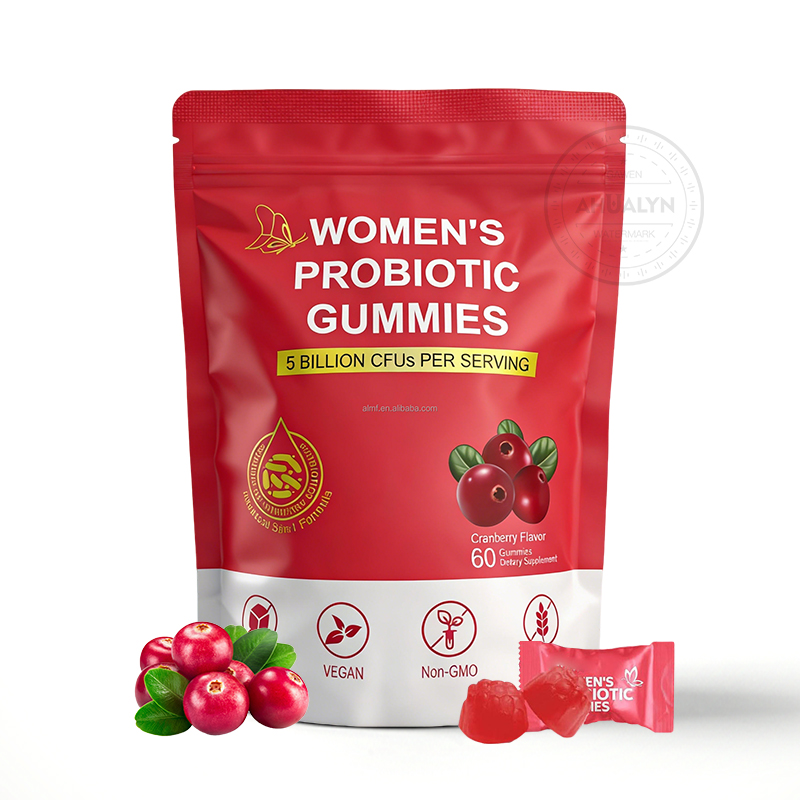
Ahualyn's OEM/ODM services are designed to mitigate these pitfalls: our women's probiotic gummy formulations feature clinically validated strains (including GR-1®/RC-14®), rigorous stability testing in gummy matrices, comprehensive regulatory support for global markets, and transparent supply chain documentation. For brands ready to launch with confidence, we also offer ready-to-white-label Women's Probiotic Gummies to accelerate time-to-market.
Real-World Impact: Lessons from Successful Launches
Learning from others' experiences helps avoid costly mistakes. Here are anonymized insights from women's probiotic gummy projects:
Challenge: Initial OEM partner selected strains based on marketing trends without clinical validation; product failed to deliver promised vaginal health benefits.
Solution: Partnered with Ahualyn to reformulate with GR-1®/RC-14® strains, conducted gummy-specific stability testing, and revised claims with regulatory review.
Results: Successful relaunch with 94% consumer satisfaction; zero regulatory inquiries; 3.2x repeat purchase rate within 6 months.
Challenge: Assumed capsule stability data applied to gummies; product potency dropped 60% before expiry, triggering customer complaints.
Solution: Implemented Ahualyn's gummy-specific stability protocol with moisture-barrier packaging and real-time monitoring.
Results: Potency maintained >95% through 18-month shelf life; customer retention increased 45%; expanded to 3 additional EU markets.
Challenge: Labeling claims triggered regulatory review in multiple markets due to inconsistent claim substantiation.
Solution: Leveraged Ahualyn's regulatory dossier support to align claims with strain-specific evidence and regional requirements.
Results: Successful approvals in 5 key markets; reduced time-to-market by 4 months; avoided costly reformulations.
These cases underscore a critical principle: successful women's probiotic gummy launches require more than a recipe—they demand scientific rigor, quality discipline, and regulatory expertise. Partnering with an OEM that provides end-to-end support transforms risk into competitive advantage.

Figure 3: End-to-end OEM support—from strain selection to regulatory compliance—enables successful women's probiotic gummy launches
Frequently Asked Questions: OEM Women's Probiotic Gummies
How long does it take to develop a custom women's probiotic gummy from concept to production?
Typical timelines range from 12-20 weeks for standard formulations using validated strain platforms, to 24-36 weeks for novel strain combinations or complex regulatory pathways. Ahualyn's parallel development process—conducting regulatory review concurrently with formulation work—can accelerate timelines by 20-30%.
What documentation should I request from an OEM partner before signing a contract?
Essential documents include: GMP certification, recent third-party audit reports, strain-specific Certificates of Analysis, stability data for the gummy format, regulatory dossier templates for your target markets, and a clear quality agreement outlining testing protocols and acceptance criteria.
Can I modify a ready-to-white-label formula, or must I start from scratch?
Most OEMs, including Ahualyn, offer flexible approaches: start with a validated base formula (e.g., our Women's Probiotic Gummies) and customize flavors, sweeteners, or co-ingredients. This reduces development time and risk while allowing brand differentiation.
How do you ensure probiotic viability during shipping and storage?
We use a multi-layered approach: strain selection for gummy matrix tolerance, microencapsulation for sensitive strains, moisture-barrier packaging with oxygen scavengers, and clear storage instructions on labels. Real-time stability testing validates performance under intended distribution conditions.
What support do you provide for post-launch regulatory compliance?
Our regulatory team monitors global updates affecting probiotic supplements, provides adverse event reporting guidance, assists with label revisions for new markets, and offers claim substantiation reviews for marketing materials. We view compliance as an ongoing partnership, not a one-time checkbox.
Launch Women's Probiotic Gummies with Confidence
Don't let strain selection errors, quality gaps, or compliance risks derail your product launch. Partner with Ahualyn's OEM/ODM team for scientifically validated formulations, rigorous quality systems, and end-to-end regulatory support—from concept to commercialization.
Request a Consultation & Sample Kit✓ Clinically validated women's probiotic strains ✓ GMP certified gummy manufacturing ✓ Global regulatory dossier support ✓ Pilot-to-production scalability


