




If you are considering a supplement that combines oil of oregano and black seed oil, you may want to know what each ingredient contributes—and whether the blend has been studied as a finished product. This guide helps you read the formula, distinguish ingredient research from product-specific proof, check practical safety considerations, and decide what to ask before buying or requesting a sample.
Oil of Oregano and Black Seed Oil: Two Distinct Botanicals
Oregano oil is an essential oil or extract derived from oregano plants. Its chemical profile varies with the species, growing conditions and extraction method; carvacrol and thymol are compounds commonly discussed in research. Black seed oil comes from Nigella sativa seeds and contains a complex mixture of fatty acids and other constituents. Thymoquinone is among its best-known studied compounds, but its amount can vary across raw materials and products.
Because these oils differ in origin and composition, a combination product should be assessed as a specific formulation, not as a generic “herbal synergy.” Serving size, measured constituents, processing and the full ingredient panel determine what the product actually contains. Package names or “high strength” language alone do not establish those facts.
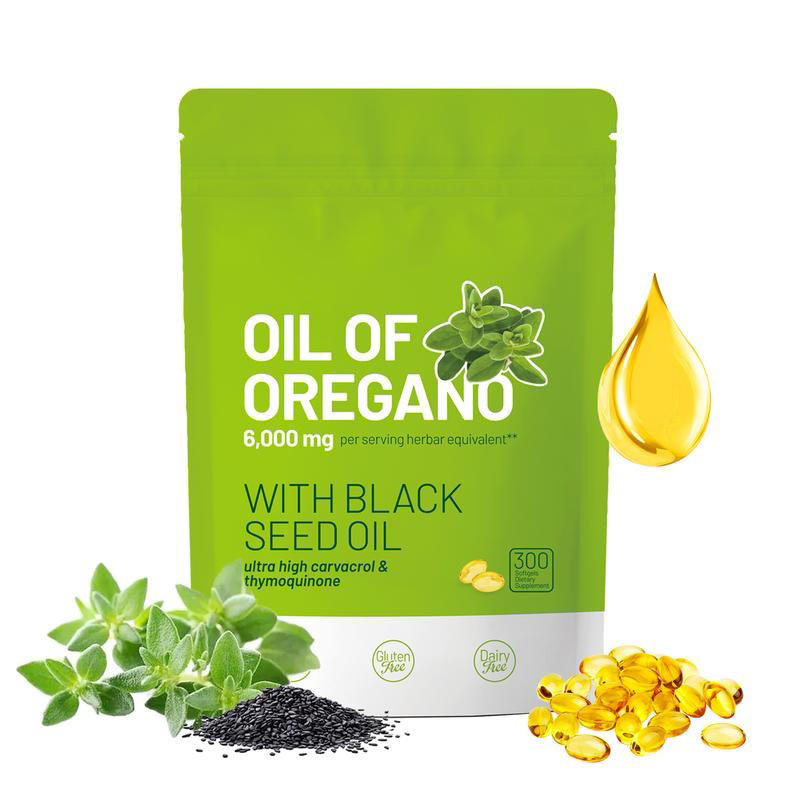
AHUALYN’s product page for Oil of Oregano with Black Seed Oil softgels lists oregano oil and black seed oil in a combined serving. The listed oil amounts and declared carvacrol are product-page claims; when making a purchasing decision, compare them with the current approved label and batch-specific documentation.
What Does the Blend’s Product Page Say?
The linked combination product page lists a serving of two softgels. Its Supplement Facts section gives oil of oregano as 6,000 mg herbal equivalent, described as being derived from 300 mg of a 20:1 fresh oil of oregano extract, and black seed oil as 200 mg per serving. It also states 165 mg naturally occurring carvacrol. These are figures published on the product page, not independently verified batch results in this article.
The page lists softgel ingredients as gelatin, glycerin and purified water, and declares exclusions including soy, dairy, gluten, tree nuts and GMOs. Suitability depends on the finished label and the individual’s requirements; gelatin also means that the stated shell is not a vegetarian capsule. Re-check the current packaging and specification before relying on these details.
When comparing a blend with separate oils, do not compare a herbal-equivalent headline with the actual oil weight as though they were identical measures. Ask the supplier to define the extract ratio, the amount of each ingredient per serving, the method used to determine carvacrol or thymoquinone, and which documents support the declared values.
| Label item | What the product page states | What to verify |
|---|---|---|
| Serving size | Two softgels | Current finished package and directions |
| Oregano oil | 6,000 mg herbal equivalent, from 300 mg of 20:1 extract | Extract identity, ratio definition and amount in approved specification |
| Carvacrol | 165 mg naturally occurring | Test method, specification and lot/batch documentation |
| Black seed oil | 200 mg per serving | Current formula, source identity and batch records |
| Softgel shell | Gelatin, glycerin and purified water | Finished label and dietary suitability |
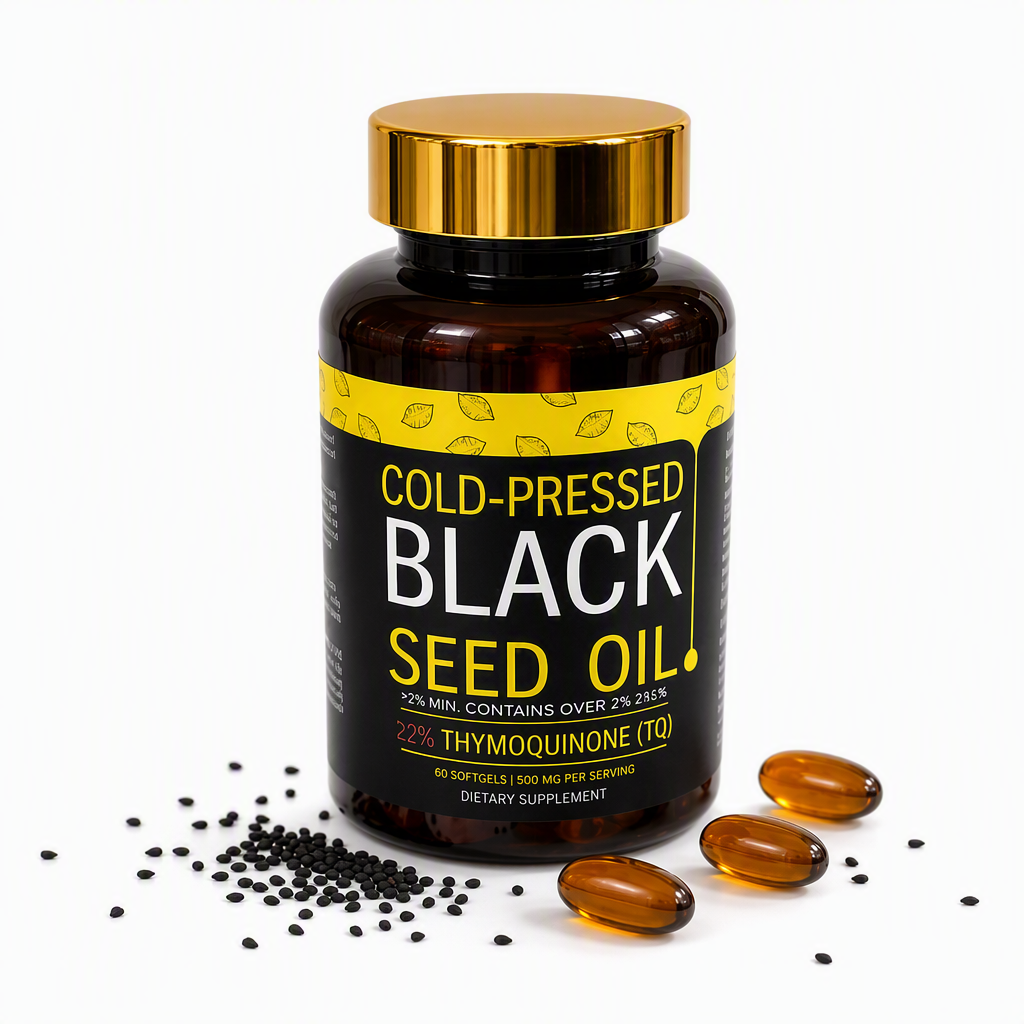
The separately listed Cold-Pressed Black Seed Oil 500 mg softgels offer a product-format point of comparison, not proof that their source, concentration or intended use matches the combination formula. Compare like-for-like finished labels rather than inferring equivalence from a shared ingredient name.
What Does the Evidence Actually Tell You?
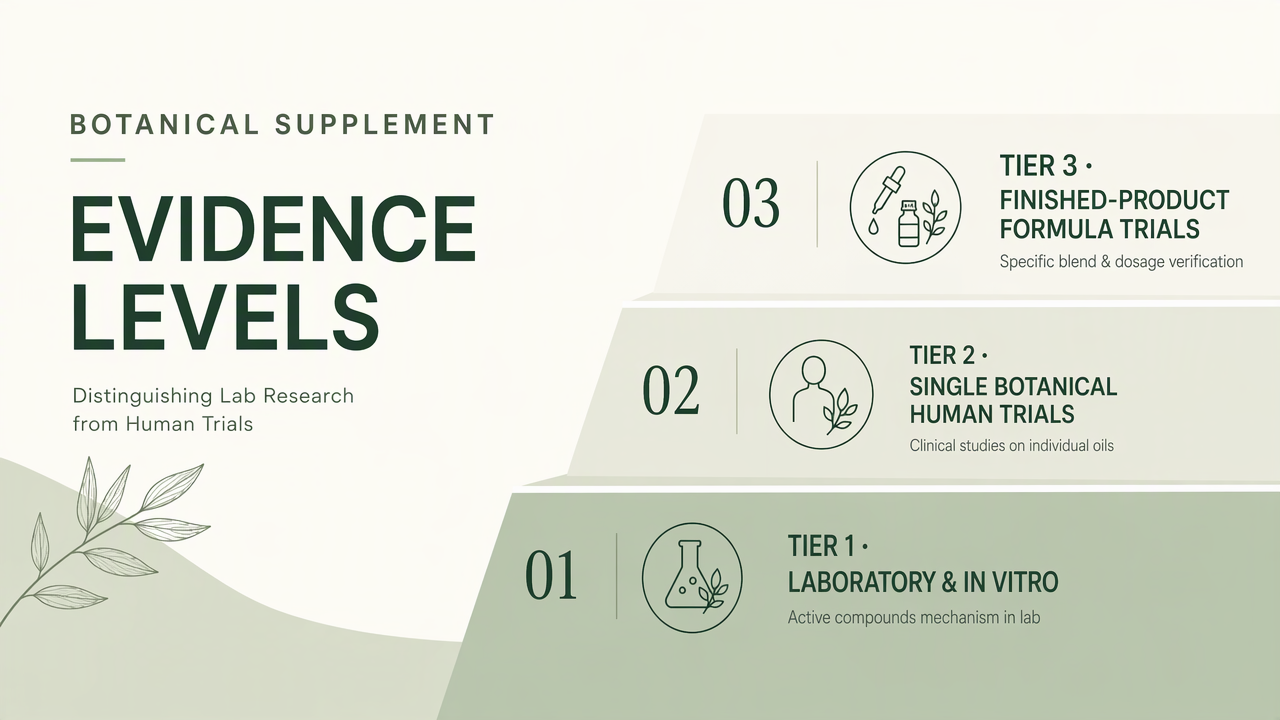
Research findings need to be read at the level where they were obtained. Laboratory or animal studies can help researchers explore biological mechanisms, but they do not establish that an oral supplement improves a health outcome in people. Likewise, a review of black seed or carvacrol studies is not a clinical trial of this exact oregano-and-black-seed softgel.
A 2017 review of clinical trials involving black seed and thymoquinone describes human research across multiple conditions while noting that many applications need further clinical study. The authors review different black-seed preparations, which should not be treated as interchangeable with every oil or commercial blend.
For oregano oil, some widely discussed antimicrobial findings come from laboratory research. They should not be converted into claims that an oral product kills pathogens or prevents infection. No direct clinical evidence for the exact combination and serving listed on the linked product page was identified for this article. Therefore, avoid asserting proven synergy, disease treatment or guaranteed results.
Combination Softgels or Separate Oils?
A combination softgel may be convenient if you want both listed oils in a single serving. It can also make it harder to change the amount of one oil independently. Separate products allow independent label review and use, but involve more packages and may create a more complicated routine.
There is no universal best choice. Base the decision on the exact quantities, quality documentation, shell material, other ingredients, intended routine and any individual restrictions. Do not take two products together simply because their names sound complementary; first total the ingredients and ask a qualified health professional or pharmacist if you have medication or health concerns.
For a brand owner, a blended SKU can simplify merchandising, but it also requires clear ingredient substantiation and finished-product claims review. A claim about “synergy” needs specific supporting evidence; it cannot be inferred from putting two botanicals in the same softgel.
Safety Questions to Check Before Using a Botanical Blend
“Natural” does not automatically mean suitable for everyone. Ask a pharmacist or healthcare professional before using a concentrated botanical supplement if you take prescription medicines, are pregnant or nursing, have a medical condition, or are preparing for a procedure. This is especially important when you do not know whether the product’s ingredients may affect your medication plan.
Black seed research reviews have discussed possible medication-metabolism interactions, including findings involving CYP enzymes. Such findings do not establish a clinically relevant interaction for every person or for this combination product, but they support checking before use rather than assuming no interactions. Do not use an essential oil product as a substitute for prescribed care.
Follow the current product label and do not exceed its directions. Stop and seek appropriate advice if you experience an unexpected reaction. Product copy should not promise infection prevention, immune “boosting,” or treatment of a medical condition unless the exact claim is supported and permitted for the intended market.
How to Evaluate a Sample and Its Documentation
If you are considering the formula for personal use, read the full label and serving directions first. If you are evaluating it for resale or a product-development brief, treat a sample as a sensory and packaging evaluation—not as proof of clinical efficacy or a substitute for quality records.
Use a consistent review sheet so you can compare products without being swayed by vague “extra strength” language. Record what the pack says, what the specification supports, and what remains unknown.
Sample review checklist
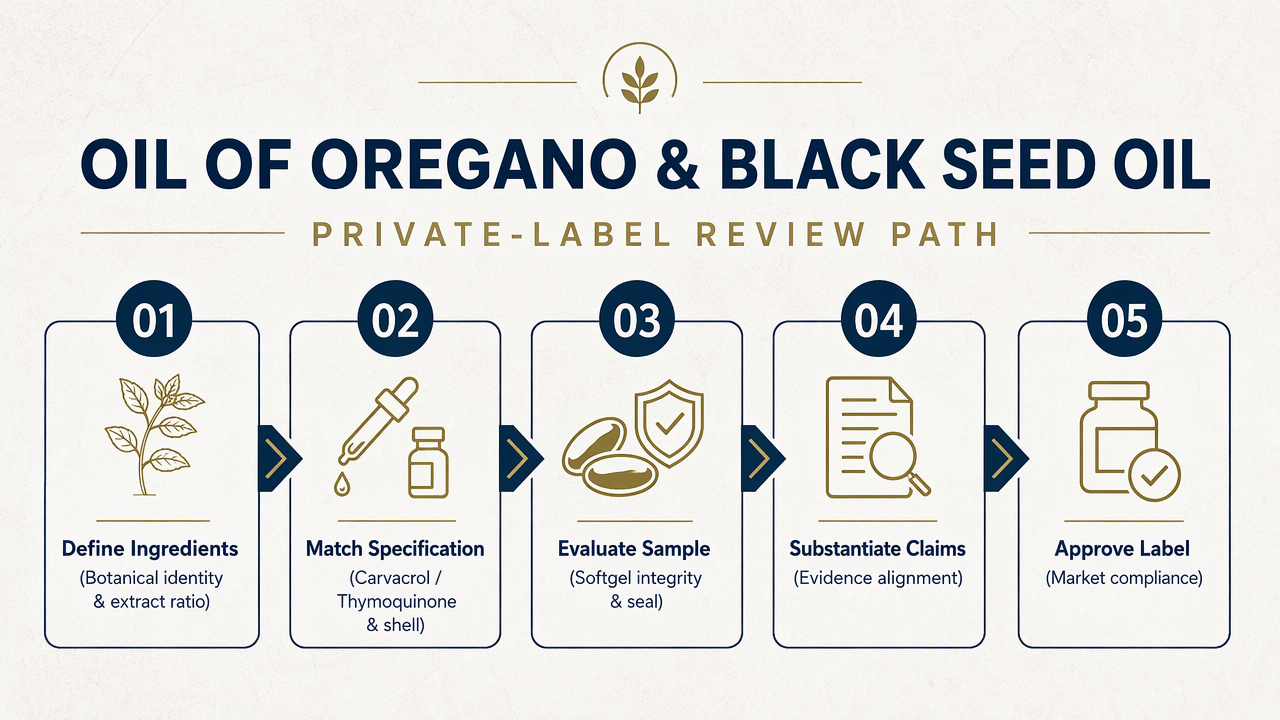
- Confirm serving facts: compare the approved label with the current specification, including the quantities and the stated extract-equivalent basis.
- Review marker documentation: ask for the applicable analytical method and documents supporting any declared carvacrol or thymoquinone content.
- Check the full excipient list: include softgel shell, allergens and dietary restrictions.
- Inspect the sample: review softgel condition, packaging, storage instructions and the experience of following the label directions.
- Clear the marketing copy: use only substantiated composition facts and carefully reviewed, market-appropriate wording.
Private-Label Buyer Checklist for an Oil Blend
For OEM/ODM buyers, the first task is not writing a benefit headline—it is agreeing on the formula definition and its documentation. Confirm botanical identity, extraction/extract-equivalent terms, declared markers, capsule shell, allergens, serving size and package configuration against the same revision of the finished label and specification.
Ask how batch release is documented and which statements can be supported for your target market. The information should let your quality and regulatory reviewers trace each number and claim to an applicable source. Do not assume a certificate, test or ingredient standard automatically applies to every lot or to the finished product.
AHUALYN’s OEM/ODM service overview can help frame a development discussion. For a specific sample or specification request, use the AHUALYN contact page.
Frequently Asked Questions
Use these answers as general label-reading guidance. They do not verify a particular batch or replace personalized advice from a qualified health professional.
Does combining oregano oil and black seed oil make the formula more effective?
Not necessarily. The ingredients have different chemical profiles, but a combination alone does not prove synergy or superior effectiveness. Look for evidence on the exact finished formula and serving.
What does “6,000 mg” mean on the oregano blend page?
The linked product page describes 6,000 mg as herbal equivalent and states that it comes from 300 mg of a 20:1 fresh oil of oregano extract per two-softgel serving. Confirm the current approved label and specification before using those figures in a purchase or marketing decision.
Is carvacrol the same as oregano oil?
No. Carvacrol is a constituent associated with some oregano oils. A declared carvacrol amount is not interchangeable with the total oregano oil or extract amount.
Can I take this blend with medication?
Do not assume it is appropriate alongside every medication. Discuss the exact product label with a pharmacist or healthcare professional, particularly because botanical ingredients may have interaction considerations.
Is this exact blend clinically proven?
This article did not identify a clinical trial on the exact combination and serving described on the product page. Research on an individual botanical or compound cannot automatically substantiate claims for the finished blend.
Choose the Blend You Can Verify
Oil of oregano and black seed oil are distinct ingredients that may be combined in a softgel, but the product name does not prove the formula’s quality or the blend’s clinical effects. Make your decision from the actual serving, full label, current documentation, relevant safety considerations and evidence for the finished product.
If you are developing a private-label formula, clarify each ingredient specification before writing benefit copy. Request the current sample and documents, then have the final label reviewed for your sales market.


