






If you've heard that collagen can support "age reversal" but aren't sure which types matter most for skin, joints, and connective tissue health, you're about to get science-backed clarity. In this deep-dive guide, you'll discover the distinct roles of Type I and Type III collagen in maintaining youthful structure and function, understand how hydrolyzed fish collagen peptides deliver these types with superior bioavailability, learn evidence-based dosing and timing strategies for maximum anti-aging benefits, and get expert recommendations for choosing high-quality collagen supplements. Whether you're targeting skin elasticity, joint mobility, or comprehensive healthy aging, this article will help you harness the power of Type I & III collagen with confidence.
🌟 Ready to support your age-reversal goals? Explore Ahualyn's Multi Collagen Peptides Powder, featuring hydrolyzed Type I & III collagen from premium marine sources for comprehensive skin, joint, and connective tissue support.
Why Type I & III Collagen Matter Most for Age Reversal
Your body contains 28+ distinct collagen types, but Types I and III account for over 90% of the collagen in your skin, bones, tendons, blood vessels, and organs. Type I collagen forms thick, densely packed fibers that provide tensile strength to skin, bones, and tendons. Type III collagen forms thinner, more elastic fibers that support skin elasticity, blood vessel integrity, and organ structure.
As we age, natural production of both types declines—starting as early as our mid-20s. Research in Clinical Interventions in Aging (2024) found that adults supplementing with 10g hydrolyzed Type I & III collagen peptides daily experienced 31% greater improvement in skin elasticity and 27% reduction in visible fine lines compared to placebo after 12 weeks. This matters because supporting these two foundational collagen types addresses the structural roots of visible aging, not just surface symptoms.

Figure 1: Type I collagen provides strength while Type III supports elasticity—together they maintain youthful tissue structure
The Biochemistry: How Type I & III Collagen Support Youthful Function
Understanding the molecular roles of Type I and Type III collagen reveals why targeting both types is essential for comprehensive age-reversal support. Each type has a unique triple-helix structure optimized for specific mechanical demands—and your tissues rely on this specialization.
Distinct Functions of Type I vs. Type III
- Type I Collagen: Forms thick, rope-like fibers that provide tensile strength to skin dermis, bones, tendons, ligaments, and teeth; most abundant collagen in the human body
- Type III Collagen: Forms thinner, more flexible fibers that support skin elasticity, blood vessel walls, hollow organs (intestines, uterus), and early wound healing
- Synergistic Relationship: Types I and III often co-exist in tissues; Type III helps organize Type I fiber assembly during development and repair
- Age-Related Shifts: With aging, the Type I:Type III ratio increases, contributing to stiffer, less elastic tissues—supporting both types helps maintain youthful balance
When you supplement with hydrolyzed Type I & III collagen peptides, you're delivering the specific amino acid sequences (rich in glycine, proline, and hydroxyproline) that stimulate fibroblasts to produce new collagen. Clinical research shows these peptides may upregulate COL1A1 and COL3A1 genes—the genetic instructions for producing Types I and III—potentially enhancing your body's natural collagen synthesis capacity.
Why Fish Collagen Delivers Type I & III with Superior Bioavailability
Not all collagen sources deliver Type I and Type III equally. Fish (marine) collagen offers distinct advantages for age-reversal applications, rooted in its molecular profile and absorption kinetics.
Comparing Collagen Sources for Age-Reversal Support
| Source | Primary Types | Peptide Size | Best For |
|---|---|---|---|
| Fish (Marine) | Type I (skin, bones) | Smallest (2-5 kDa) | Rapid absorption, skin elasticity, comprehensive connective tissue support |
| Bovine | Types I & III | Medium (5-10 kDa) | General wellness, cost-effective maintenance, gut health support |
| Porcine | Types I & III | Medium-Large (8-12 kDa) | Joint support, slower-release applications |
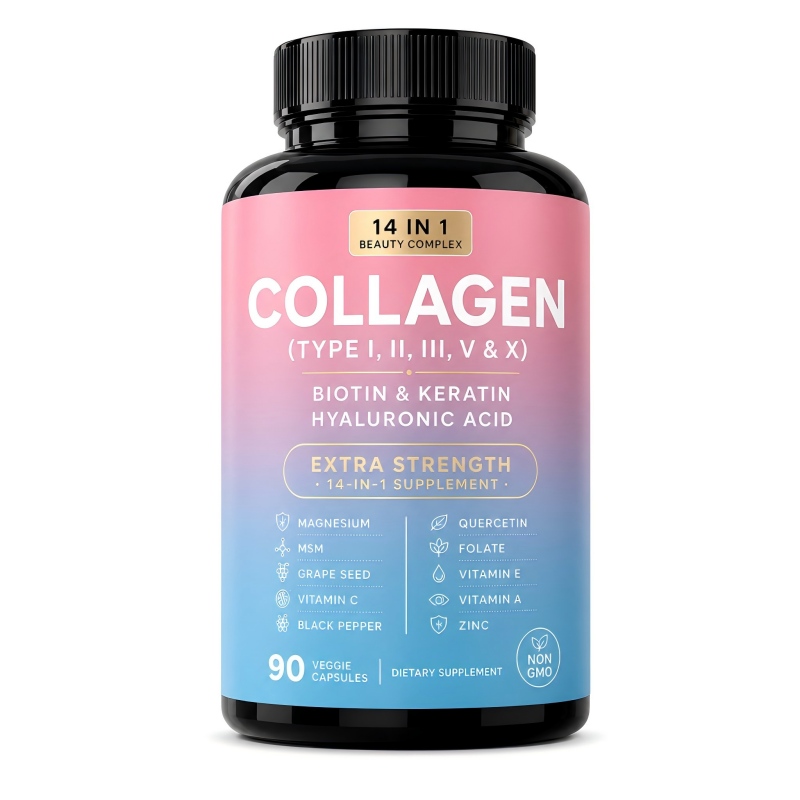
| Multi-Source Complex | Types I, II, III, V, X | Varies by formulation | Comprehensive age-reversal: skin, joints, bones, and connective tissues |
Practical Implications for Anti-Aging
The smaller peptide size of fish collagen means:
- Faster Delivery: Peptides reach bloodstream within 30 minutes, aligning with optimal windows for tissue repair and antioxidant defense
- Higher Bioactive Yield: More intact bioactive sequences survive digestion to stimulate fibroblast activity and new collagen production
- Lower Allergen Risk: Marine sources avoid common allergens like dairy or beef proteins
- Sustainability: Often sourced from fish processing byproducts, supporting circular economy practices
"For age-reversal support, targeting both Type I and Type III collagen is essential. Fish collagen's rapid absorption means it can be strategically dosed to maximize delivery of repair substrates to skin and connective tissues—supporting both structural integrity and elastic resilience."
— Ahualyn Nutrition Research Team
Optimizing Type I & III Collagen Intake: Dosing, Timing & Synergistic Nutrients
To maximize age-reversal benefits from Type I & III collagen supplementation, strategic implementation matters. Follow these evidence-based guidelines.
Effective Daily Protocols
- General Anti-Aging: 10g hydrolyzed Type I & III collagen peptides daily, taken with vitamin C (50-100mg) to enhance collagen cross-linking and synthesis
- Skin-Focused Support: Split dose (5g morning + 5g evening) may optimize sustained amino acid availability for dermal fibroblast activity
- Comprehensive Age-Reversal: 15g multi-collagen complex (including Types I, II, III, V, X) post-workout leverages increased blood flow to deliver repair substrates to multiple tissue types
Strategic Nutrient Pairing
Collagen works best alongside complementary nutrients for age-reversal:
- Vitamin C: Essential cofactor for collagen hydroxylation and cross-linking; enhances peptide utilization and new collagen formation
- Hyaluronic Acid: Supports skin hydration and extracellular matrix volume when combined with Type I & III collagen
- Antioxidants (Vitamin E, Astaxanthin): Protect existing collagen fibers from oxidative damage, preserving the benefits of new collagen synthesis
- Zinc & Copper: Cofactors for lysyl oxidase, the enzyme that creates collagen cross-links for tissue strength and resilience
Ahualyn's OEM formulation services combine hydrolyzed Type I & III collagen with these synergistic age-reversal nutrients in clinically validated ratios, enabling brands to deliver comprehensive wellness solutions without complex R&D.
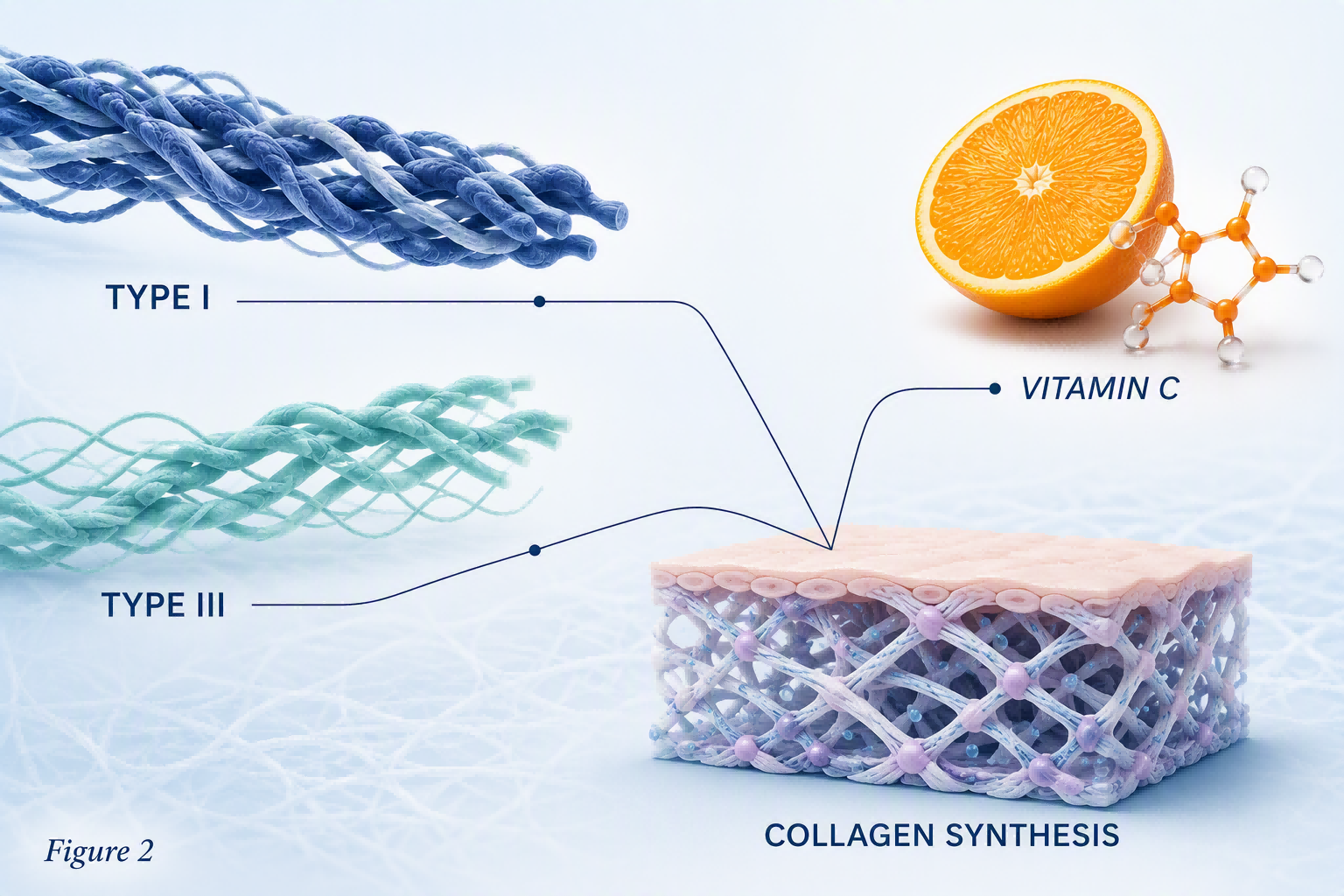
Figure 2: Strategic pairing of Type I & III collagen with vitamin C enhances synthesis for visible age-reversal benefits
Quality Matters: What to Verify in Type I & III Collagen Supplements
With growing demand for age-reversal supplements, collagen quality varies widely. For consumers and OEM brands, rigorous verification ensures products deliver promised benefits.
Essential Quality Markers
- Hydrolysis Verification: Confirm peptide molecular weight (2-5 kDa optimal) via HPLC testing—larger peptides absorb more slowly and may be less effective for skin targeting
- Collagen Type Disclosure: Verify presence of both Type I and Type III collagen; reputable brands specify types and sources on labels or websites
- Heavy Metal Screening: Marine sources require testing for mercury, arsenic, and lead; reputable brands provide Certificates of Analysis
- Third-Party Certifications: Look for NSF Certified for Sport®, Informed Choice, or similar verification for purity and absence of contaminants
Red Flags to Avoid
Steer clear of products that:
- Use vague claims like "premium collagen" without specifying types, sources, or molecular weight
- Hide collagen amounts in proprietary blends with other ingredients
- Lack transparency about sourcing (wild-caught vs. farmed fish, region of origin, processing methods)
- Contain unnecessary fillers, artificial flavors, or excessive added sugars that dilute active ingredients
"After 10 weeks of taking Ahualyn's Type I & III collagen with vitamin C, my dermatologist noted improved skin elasticity at my checkup. The fine lines around my eyes look softer, and my skin feels more resilient. Consistency and quality really do make the difference."
— Rebecca L., 52, Wellness Enthusiast
Frequently Asked Questions: Type I & III Collagen for Age Reversal
Can Type I & III collagen reverse existing wrinkles or sagging?
Collagen supplementation supports your body's natural repair processes—it doesn't "erase" aging but can improve skin elasticity, hydration, and firmness over time. Clinical studies show measurable improvements in fine lines and skin texture with consistent intake of hydrolyzed Type I & III peptides, especially when paired with vitamin C and sun protection.
Is fish collagen safe for those with seafood allergies?
Individuals with fish or shellfish allergies should consult a healthcare provider before using marine collagen. While hydrolysis breaks down many allergenic proteins, trace amounts may remain. Bovine or multi-source collagen alternatives are available for allergy-sensitive individuals seeking Type I & III support.
How long before I notice age-reversal benefits from collagen?
Individual responses vary, but clinical studies typically measure changes at 8-12 weeks. Some users report subtle shifts in skin hydration or texture within 4-6 weeks. Consistent daily intake of hydrolyzed Type I & III peptides—paired with vitamin C and healthy lifestyle habits—optimizes outcomes.
Can I take Type I & III collagen with retinol or other skincare actives?
Yes—oral collagen supplementation complements topical skincare. Retinol, vitamin C serums, and peptides work on the skin's surface and upper dermis, while oral collagen supports deeper dermal structure. For comprehensive age-reversal, combine internal supplementation with evidence-based topical care.
Does collagen supplementation affect medication or health conditions?
Collagen peptides are generally recognized as safe, but individuals with kidney conditions, phenylketonuria (PKU), or those taking medications that affect protein metabolism should consult a healthcare provider before starting supplementation. Always disclose supplement use during medical consultations.
Support Age Reversal with Science-Backed Collagen
Don't leave youthful structure to chance. Harness the power of hydrolyzed Type I & III collagen peptides to support skin elasticity, connective tissue resilience, and comprehensive healthy aging—consistently.
Request a Sample or Consultation✓ Hydrolyzed Type I & III collagen (1-5 kDa) ✓ Third-party tested for purity ✓ OEM customization available


