




If you are weighing marine against bovine collagen, you deserve more than a claim that one source is “better.” In this guide, you will learn where each ingredient comes from, how to interpret the research without overreading it, who needs to check source-related restrictions, and how to compare real capsule and powder labels. You will leave with a practical checklist for choosing a finished product—or briefing a private-label supplier.
The short answer: source matters for allergens and dietary preferences; it does not, by itself, prove that one finished supplement will deliver better results. Compare the actual formula and verified documents before you decide.
What Do “Marine” and “Bovine” Collagen Mean?
Marine collagen describes collagen from marine animals; in dietary supplements it commonly refers to fish-derived material, such as collagen extracted from fish skin, scales or bones. Bovine collagen comes from cattle tissue, which may include hide, bone or other connective tissue. These terms identify an animal source, not the amount of collagen in a serving or a proven health outcome. See the review of hydrolyzed collagen sources and processing for background.
Fish skin is often associated with type I collagen, while bovine raw materials can have different collagen profiles depending on the tissue. But the finished product may contain hydrolyzed collagen peptides rather than intact native collagen. Species, tissue, hydrolysis, blending and other ingredients all matter. A label that only says “marine” or “bovine” is not a complete specification.
For a real buying decision, request the source species or animal, raw-material specification, ingredient list and the quantity of collagen per labeled serving. If the product is described as multi-collagen, confirm every source rather than assuming that it contains only fish or only cattle collagen.
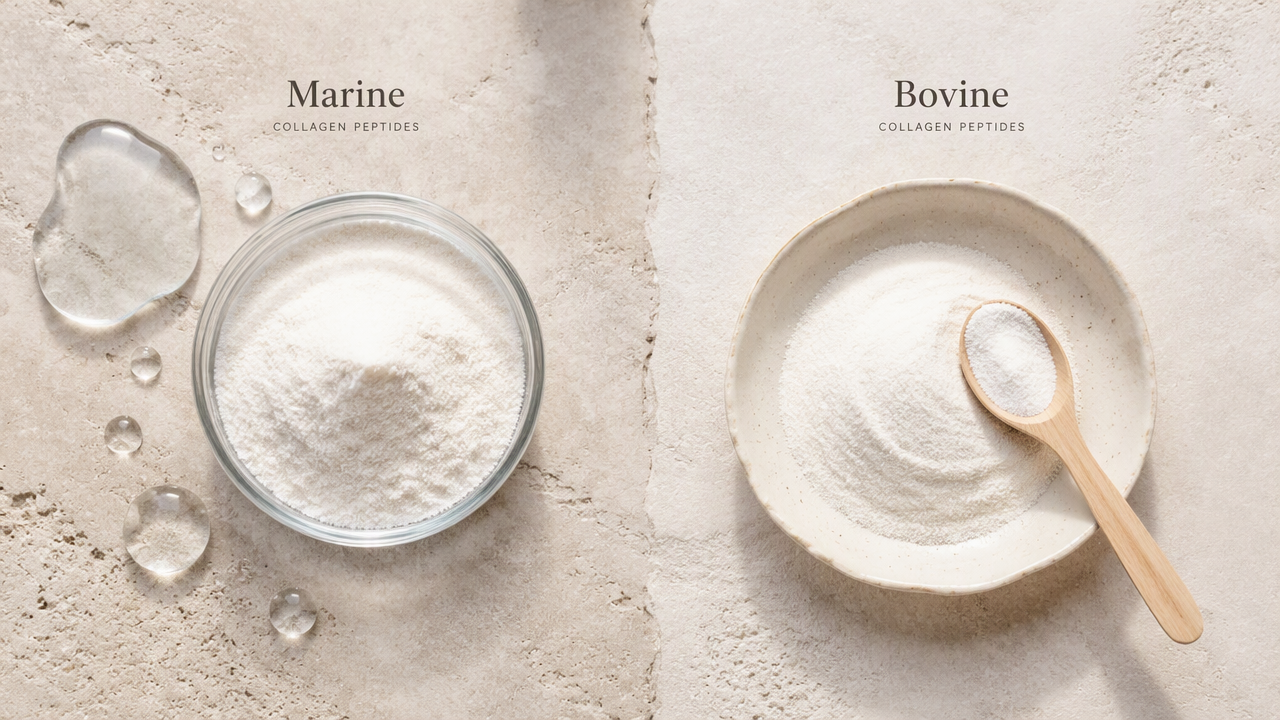
Marine vs. Bovine Collagen: A Useful Comparison
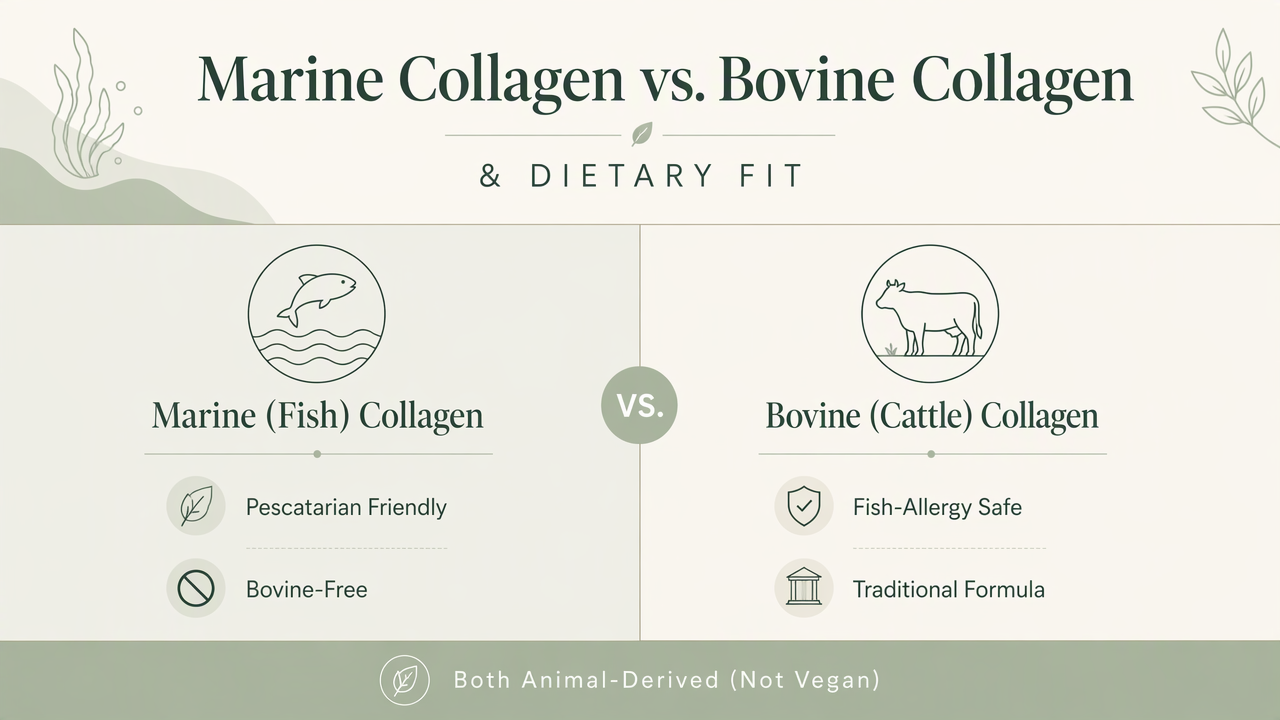
The most actionable differences are the raw-material origin and the restrictions that follow from it. A fish-derived ingredient is a fish-source consideration; a cattle-derived ingredient may be unacceptable under some dietary or purchasing requirements. Neither statement tells you whether the final formula is suitable for a specific individual without checking the complete label.
Use this table as a document-checking guide, not as a scorecard for absorption or effectiveness. Taste, solubility, serving amount and other finished-product attributes depend on the specific formulation and should be checked with a sample.
| Question | Marine collagen | Bovine collagen |
|---|---|---|
| Typical source | Fish-derived material; verify species and tissue. | Cattle-derived material; verify tissue and traceability. |
| Allergen / restriction | Fish-source concern; check the finished label and cross-contact information. | Cattle-source concern for people avoiding bovine ingredients; check other ingredients and processing aids. |
| Collagen type | Fish skin commonly contains type I; request the actual material specification. | Composition depends on the tissue; request the actual material specification. |
| Human benefit | Cannot be ranked above bovine products from the source name alone. | Cannot be ranked above marine products from the source name alone. |
| Best practical check | Compare collagen per serving, full ingredient list, allergen statement, sample performance and current quality documents. | |
What this means in practice: if two powders have different serving sizes or added ingredients, their source is only one variable. To compare like with like, put their current labels side by side before making any claim about value.
Do Marine and Bovine Collagen Work Differently?
Research on orally consumed hydrolyzed collagen has evaluated outcomes including skin hydration and elasticity. A 2023 systematic review and meta-analysis brought together 26 randomized trials involving 1,721 participants. It reported results for collagen supplements as a broad category, while noting biases in the included studies and calling for more rigorous trials.
That review also explored differences by source, but the underlying studies were not a balanced, direct head-to-head test of fish versus cattle formulas. Its reported analysis did not find a significant source difference for the measured elasticity outcome. Do not translate subgroup observations into “marine absorbs faster,” “bovine is better for joints,” or a promise about a particular AHUALYN product.
For a meaningful evidence comparison, ask whether a study used the same specific ingredient, amount, formulation and population as the product you are considering. A study of one collagen peptide ingredient does not automatically validate another powder or a multi-ingredient capsule. Research provides context; your final label and product documentation establish what is actually being sold.
Who Might Choose—or Avoid—Each Source?
If you have a fish allergy, do not assume processed fish collagen is safe. A published fish-collagen allergy case report documents a serious reaction to a product containing fish collagen. Check the complete label and speak with an appropriate healthcare professional rather than using a general article as individual allergy clearance. Fish and shellfish allergies are not interchangeable labels; confirm the ingredient and your own allergy history.
If you avoid cattle-derived ingredients, a verified fish-derived option may better fit that restriction, but you must also check capsules, excipients and processing aids. If you follow a vegan diet, neither fish-derived nor bovine-derived collagen is vegan. For religious or other certification-based requirements, request evidence for the specific finished product; source naming alone is not proof of compliance.
If neither source is excluded, choose based on the actual formulation, per-serving quantity, flavor, ease of use and documentation. A product that fits your routine and passes your ingredient checks is more relevant than an unsupported “winner” between animal sources.
How Do Source and Format Affect Capsules and Powders?
Animal source and delivery format are separate choices. A capsule can contain a multi-ingredient collagen formula; a powder can be a collagen-peptide blend. The format changes how you take and compare a product, but it does not independently establish marine or bovine origin. Inspect the actual ingredient list of each finished product.
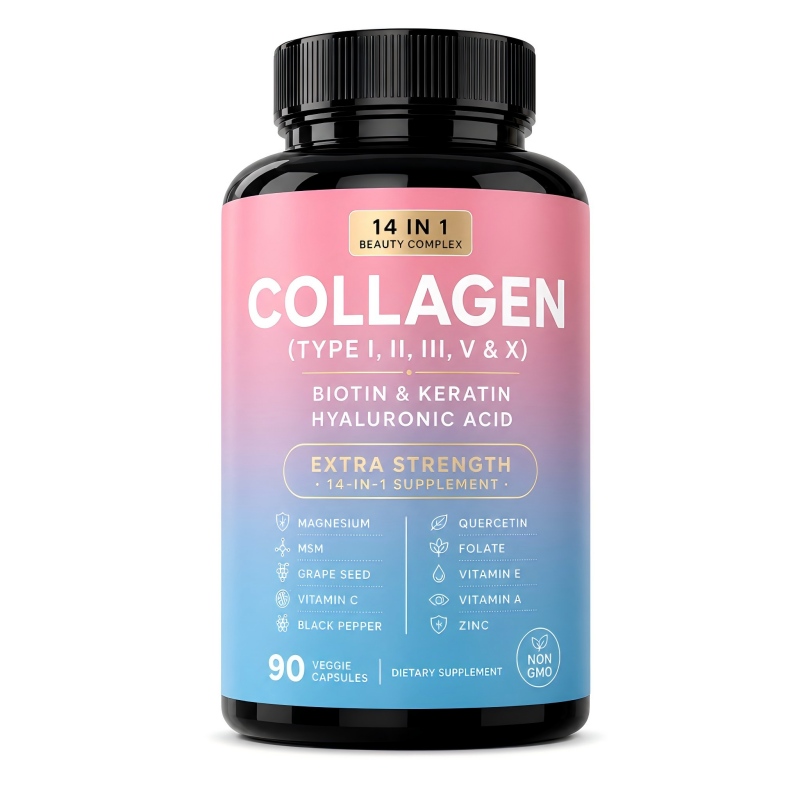
For a capsule-oriented example, review AHUALYN’s 14-in-1 Collagen Beauty Complex Capsules. For a mixing-oriented example, see its Multi-Collagen Peptides Powder. These are examples of formats, not evidence that either finished product is exclusively marine or exclusively bovine. Verify each current formulation and allergen statement before describing it that way.
If you are comparing ingredients for a new formula, AHUALYN also lists separate fish collagen peptide ingredient and bovine collagen peptide ingredient pages. An ingredient offering does not verify the composition of the linked capsules or powder. For more on daily-use format decisions, read Collagen Capsules vs. Powder: Which Format Fits Your Routine?
What Should You Check Before Buying or Requesting Samples?
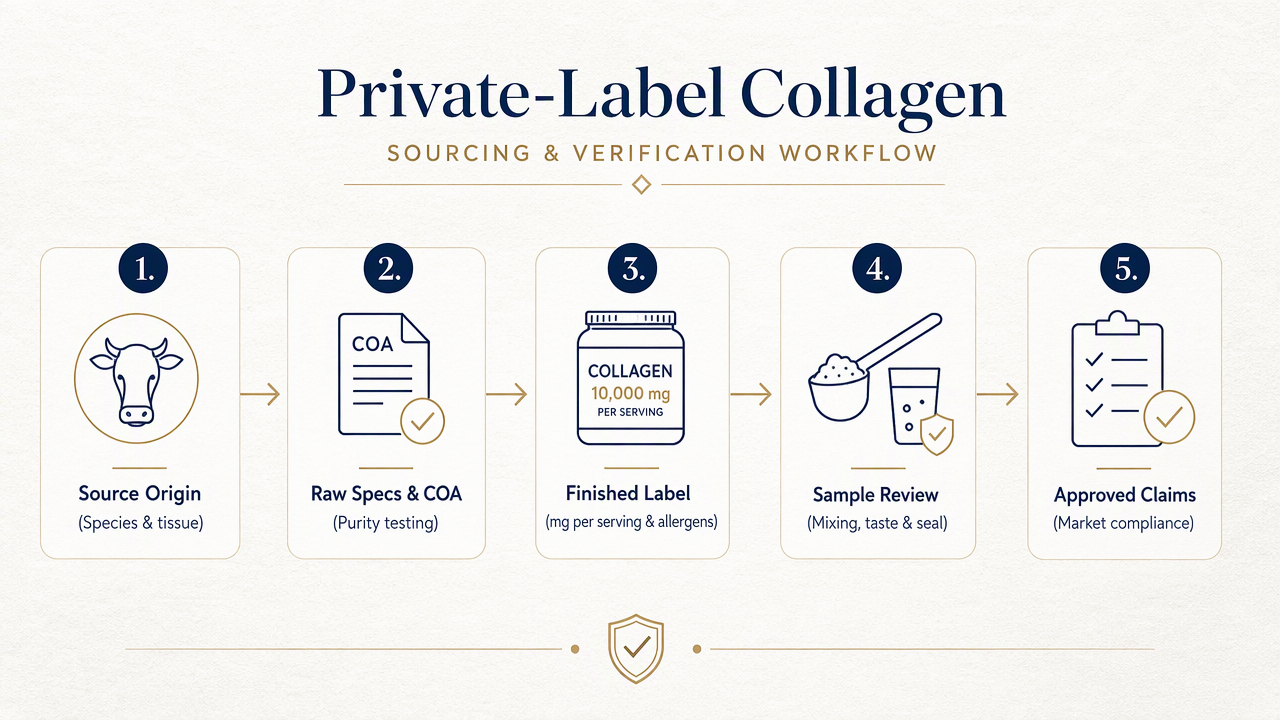
Start with the questions that could rule a product out: allergy, animal-source preference, dietary restrictions and incompatible added ingredients. Then compare eligible options on a consistent basis. Do not substitute a photograph, a broad “type I” headline or a supplier brochure for an approved finished-product label.
Five checks to make in order
- Confirm the source: species, tissue and whether several collagen sources are blended.
- Read the complete label: collagen amount per serving, serving size, other actives, capsule shell and allergens.
- Request current documents: ingredient specifications, lot-specific testing documentation as appropriate, and approved finished-label text.
- Test the sample: evaluate the actual powder’s mixing, flavor and packaging, or the capsule’s usability; record your observations rather than inventing customer results.
- Review proposed claims: align every product statement with the exact formula, evidence and requirements of the intended sales market.
For a private-label project, put those five points in your brief and request the same information from each candidate formulation. AHUALYN’s OEM/ODM service overview is a starting point for discussing options; the relevant specification, testing and any certification must still be supplied for the exact material and final product. Certification or award badges should not be added to a sales page without documentation.
Frequently Asked Questions
These answers are general selection guidance. They cannot establish the contents, safety or suitability of a particular batch without its current approved documentation.
When a product combines collagen with other ingredients, verify both the collagen source and every additional component. The product name alone may not tell you everything relevant to an allergy or dietary requirement.
Is marine collagen always fish-derived?
“Marine” is broader wording. In many supplement products it refers to fish-derived collagen, but you should ask for the specific species and material, and read the finished-product ingredient and allergen information.
Is bovine collagen automatically better for joints?
No. The fact that an ingredient comes from cattle does not establish a joint-related outcome for a finished product. Evaluate any proposed benefit claim against research on that exact ingredient and formula.
Is marine collagen safe if I have a fish allergy?
Do not make that assumption. Fish collagen has been implicated in allergic reactions. Avoid self-testing and seek advice from an appropriate healthcare professional about your individual allergy history and the product’s verified ingredients.
Are either of these options vegan?
No. Fish-derived and cattle-derived collagen are both animal-derived. Also check all other ingredients and the capsule shell if you have dietary restrictions.
Does “multi-collagen” mean the powder contains both fish and bovine sources?
Not necessarily. “Multi-collagen” is not an ingredient list. Request the approved label or current specification identifying every source and its allergen status.
Choose a Formula You Can Verify
Begin with your non-negotiables, then compare eligible finished products: source and allergens → ingredients and serving amount → sample experience → documentation → approved claims. This sequence gives you a more reliable decision than declaring marine or bovine collagen the universal winner.
If you are planning a private-label capsule or powder, ask for the current specifications and a relevant sample. Keep any benefit language tied to the precise ingredient and approved final formulation, not to the animal source alone.


