
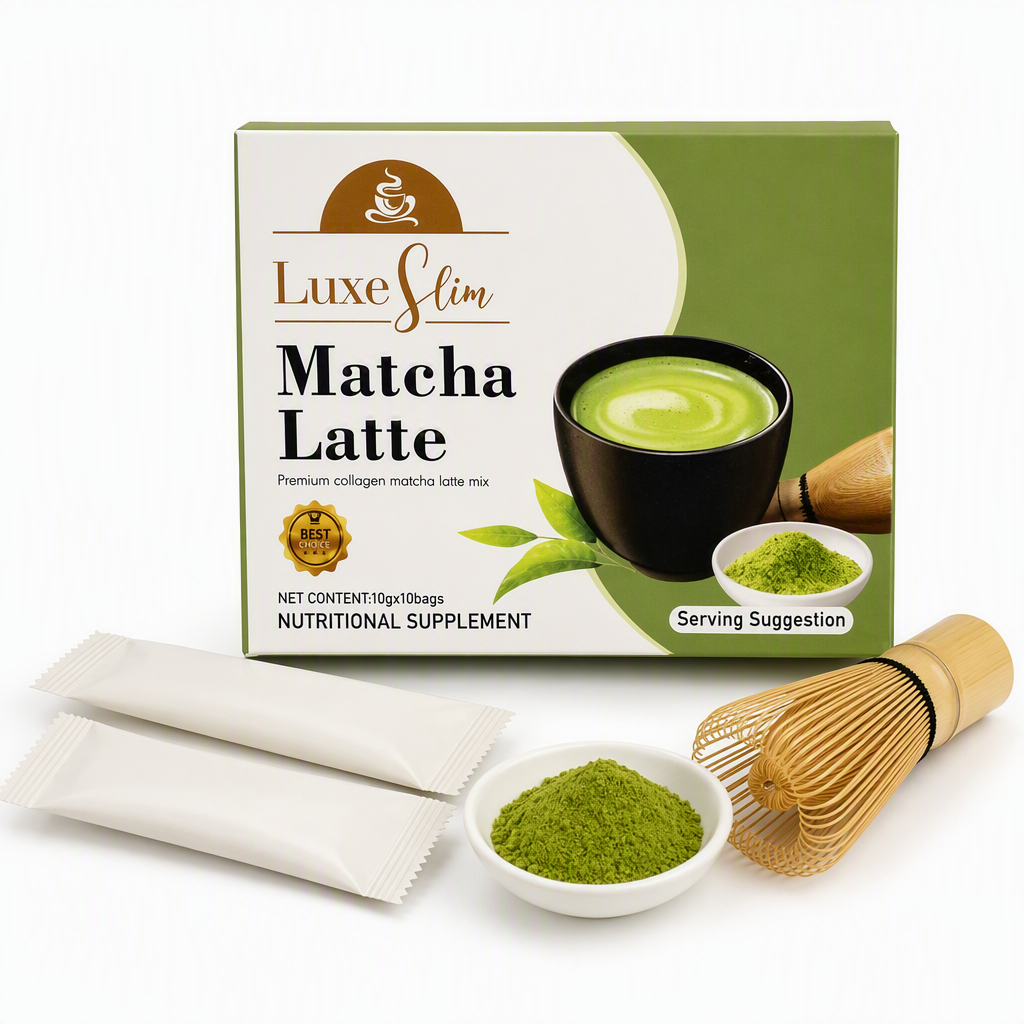




If you have seen collagen and biotin on the same supplement label, you may wonder whether they do the same thing. In this guide, you will learn how their nutritional roles differ, how to read serving information, and which questions to ask before choosing a formula.
1. What do collagen and biotin do?
Collagen is a structural protein found in connective tissues. A collagen peptide supplement provides protein fragments from an animal source; the amount and source depend on its formulation. Biotin, also called vitamin B7, is a water-soluble vitamin involved in processes that help the body use fats, carbohydrates and amino acids. One is not a substitute for the other.
Putting both names on a label describes a formulation choice. If you are comparing products, check what each serving contains and whether the final label matches the current product specification.
2. What does the evidence actually say?
The NIH Office of Dietary Supplements describes biotin as an essential vitamin involved in nutrient metabolism and notes that most people obtain enough through food. Its biotin fact sheet is a useful starting point for understanding the nutrient before reading a supplement label.
Collagen peptides are a different ingredient category: the source, processing and amount depend on the specific formulation. Research on one preparation does not establish the composition of another product. Read an overview of oral collagen research as background, not as verification of an AHUALYN formula.
One question worth asking
Does the supplier documentation identify the exact ingredient, source and amount per serving shown on the finished label? Confirm those details before reusing them in product content.
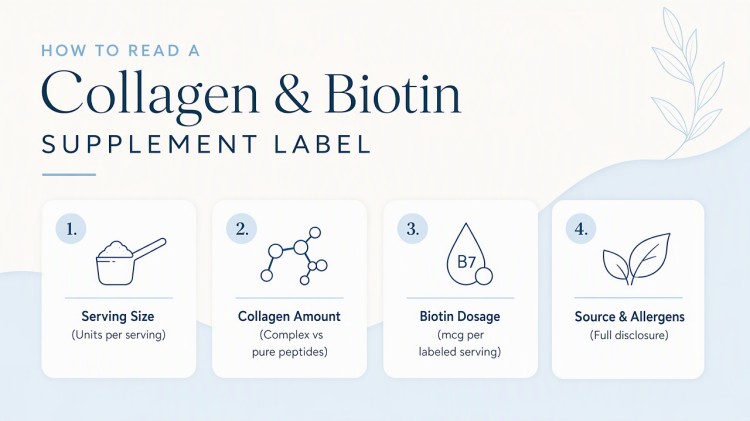
3. How should you read a collagen-and-biotin label?
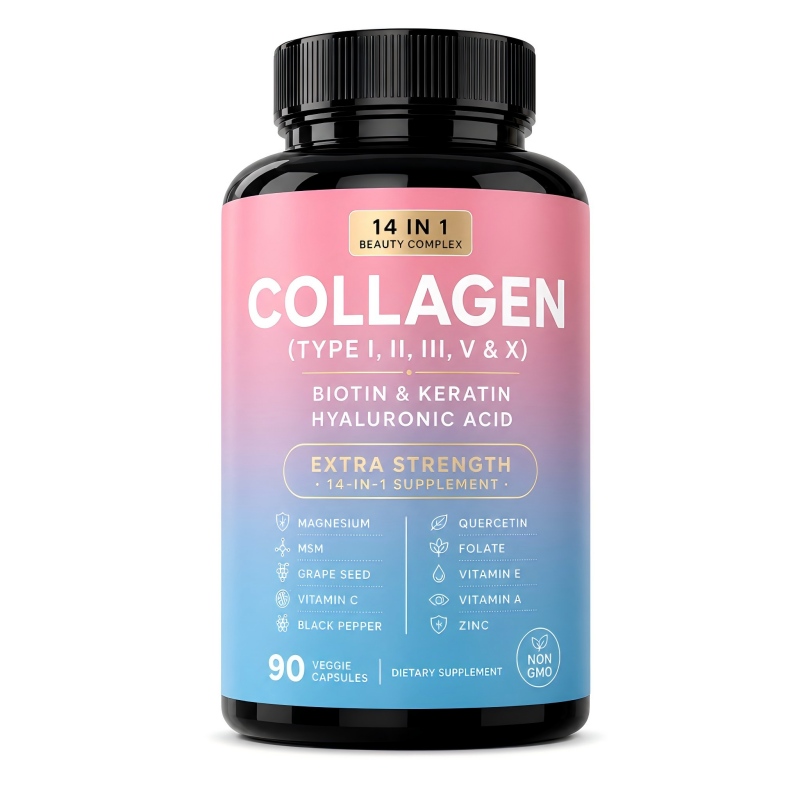
Start with the serving size, then read the amount of each ingredient per serving. AHUALYN's 14-in-1 Collagen Beauty Complex Capsules page lists three capsules per serving, 1,000 mg of collagen complex and 10,000 mcg of biotin per serving. These are page-listed figures for that capsule formula, not a recommended intake and not the composition of AHUALYN's other collagen products. Obtain the approved current label before publishing exact specifications.
For context, the NIH lists an adult adequate intake of 30 mcg of biotin per day—a reference intake, not a ceiling or a target for every supplement. A large number on a front label deserves careful interpretation, especially if a person also uses a multivitamin or another beauty supplement. Compare labels on the same per-serving basis and check the complete ingredient and allergen declarations.
Try the label check yourself: use the collagen-and-biotin capsule listing as a starting point, then request the current approved label before using its figures in a product page.
| Read this | What it tells you | Question to ask |
|---|---|---|
| Serving size | The unit used for the listed amounts | How many capsules, scoops or sachets make one serving? |
| Collagen amount | Amount of the stated collagen ingredient or complex | Does the figure refer to collagen itself or to a broader blend? |
| Biotin amount | Vitamin B7 per labeled serving, when present | Will other supplements add to the total intake? |
| Source and allergens | Raw materials and relevant dietary restrictions | Are fish, bovine, chicken, egg or other sources disclosed? |
4. Does format tell you whether biotin is included?
No. Capsule, powder and drink mix describe how a product is prepared or taken; they do not prove its exact nutrient content. The AHUALYN capsule page explicitly lists biotin. The Multi Collagen Peptides Powder page describes a powder format, but the page reviewed here does not provide a comparable, verified per-serving biotin figure. Do not assume that its ingredient panel matches the capsules.
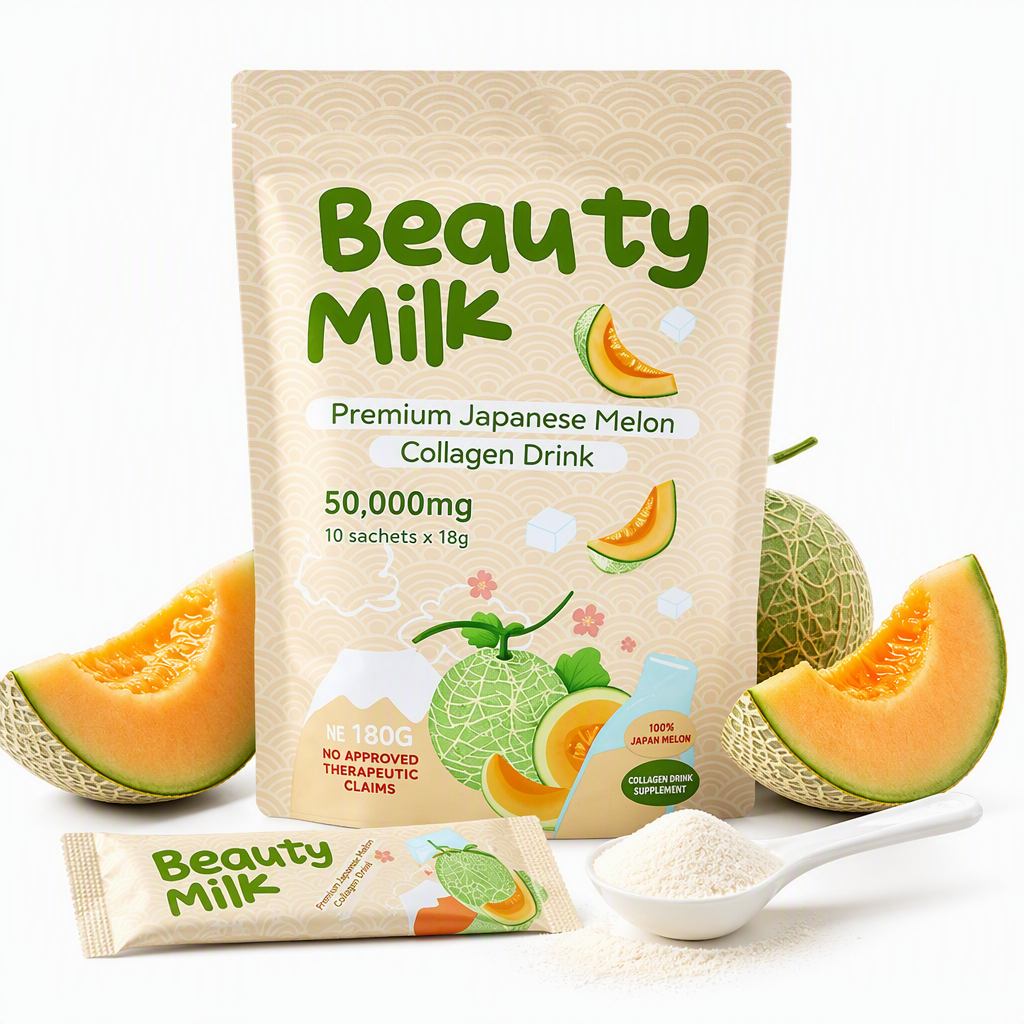
Similarly, the Beauty Milk melon collagen drink mix is a flavored sachet product to prepare with water, not a ready-to-drink bottle. Confirm its current specification and approved label before stating any biotin amount. The page also presents a collagen amount that conflicts with the sachet weight; do not repeat that amount in resale material until the discrepancy is resolved.
For a broader comparison of daily routines, see AHUALYN's Collagen Capsules vs. Powder guide. Use that format decision separately from the question of whether a specific formula includes biotin.
5. What safety details should you check?
The NIH biotin fact sheet notes that amounts above recommended intakes can affect some laboratory test results. Tell your healthcare professional and testing laboratory about supplements you take, and follow their individual test-preparation instructions rather than choosing your own stopping time.
Collagen source matters too. A vegetable capsule shell does not make animal-derived collagen vegan. Before purchasing or listing a product, check the current source declaration, allergens, full ingredient list and destination-market requirements. If pregnant, breastfeeding, under medical care or managing an allergy, ask a qualified clinician about individual suitability rather than relying on product marketing.
6. A practical way to compare beauty formulas
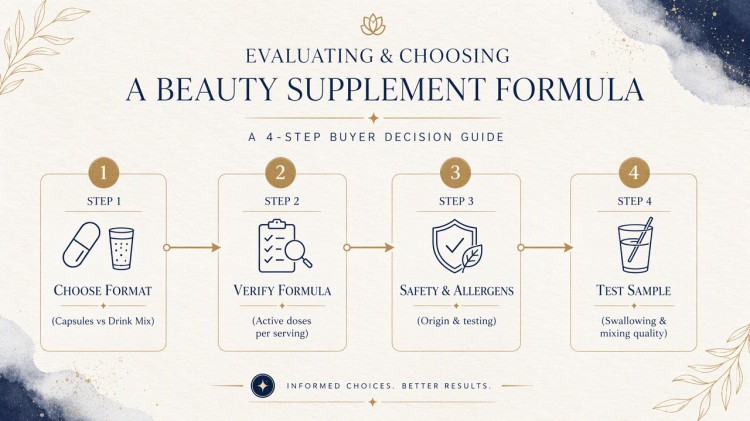
Imagine you are selecting an item for an online store. One sample is a labeled collagen-and-biotin capsule; another is a drink mix marketed for a beauty routine. First separate the customer's preferred format from the ingredient decision. Next put the approved labels side by side, record every amount per serving and request the latest source and allergen documentation. This is an illustrative buying exercise, not a report of a real customer outcome.
Then test the experience the buyer will actually encounter: capsule count and swallowing comfort, powder mixing, sachet instructions, package seal and label legibility. Keep notes from the sample evaluation. If you collect customer feedback later, obtain permission and preserve its exact context rather than presenting one review as representative.
- Define the intended user and preferred daily format.
- Verify the current formula version, serving and ingredient amounts.
- Check sources, allergens and appropriate label language.
- Check that product descriptions match current documents and local requirements.
- Request a sample before committing to packaging or resale copy.
Collagen and Biotin: FAQs
Use these answers as starting points for label reading, not as medical advice or a promise about any particular product. The approved label and local rules control product-specific statements.
Is collagen the same thing as biotin?
No. Collagen is a protein; biotin is vitamin B7. A formula may include both, but their names do not describe the same nutrient.
What does the listed biotin amount mean?
It is the quantity of vitamin B7 in the stated serving. Compare it with the serving size and other supplements you use; the number alone does not describe the entire formula.
Do all AHUALYN collagen products contain biotin?
Do not assume so. The referenced capsule page lists biotin; request the current approved ingredient panels for the powder and melon sachet separately.
What should I do before a blood test?
Tell your healthcare professional and testing laboratory about any biotin-containing supplements. Follow their advice on test preparation rather than choosing your own stopping time.
Choose the formula, not just the headline
Collagen and biotin can appear together on a label, but they remain distinct ingredients. The most useful comparison is specific: the amount of each per serving, the collagen source, the format and the current version of the ingredient documentation.
For brands and resellers, nutrition facts, formulation version and safety information should be checked before product copy is finalized.


